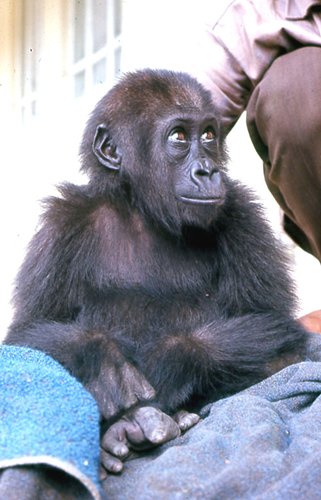
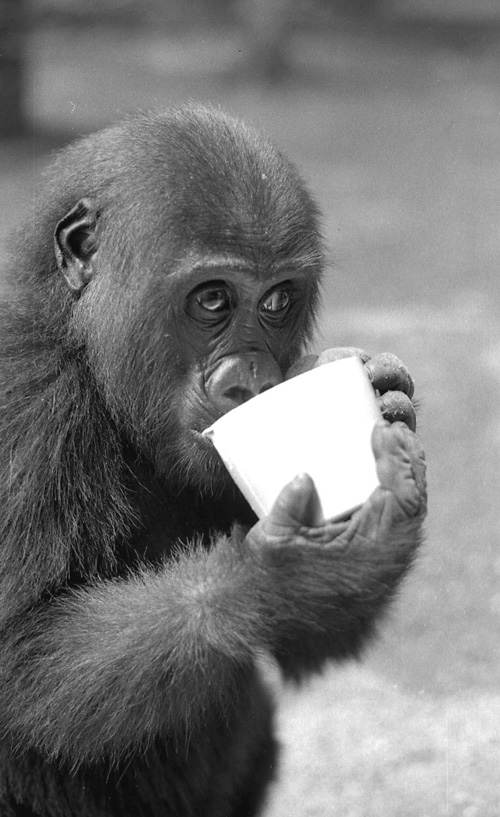
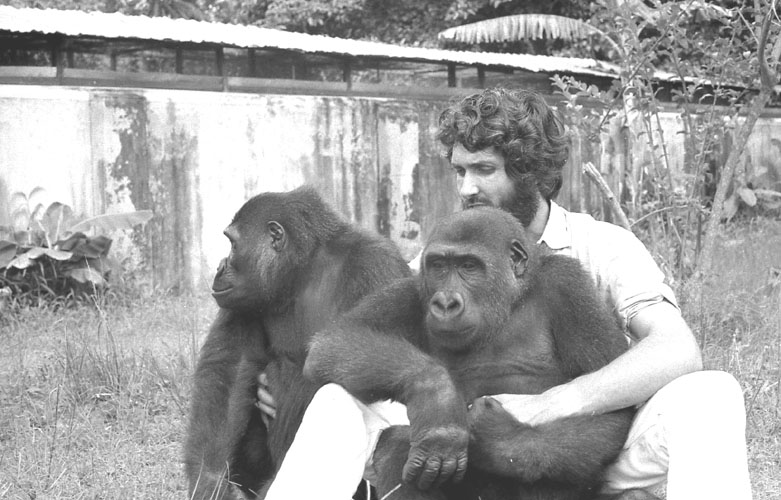
This young female western lowland gorilla, together with a male, was brought illegally into Nigeria from Cameroon. They were offered for sale to the University of Ibadan Zoological Garden and arrived there (see above) on 18 December 1964.
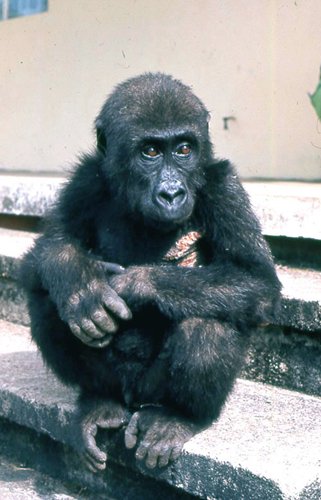
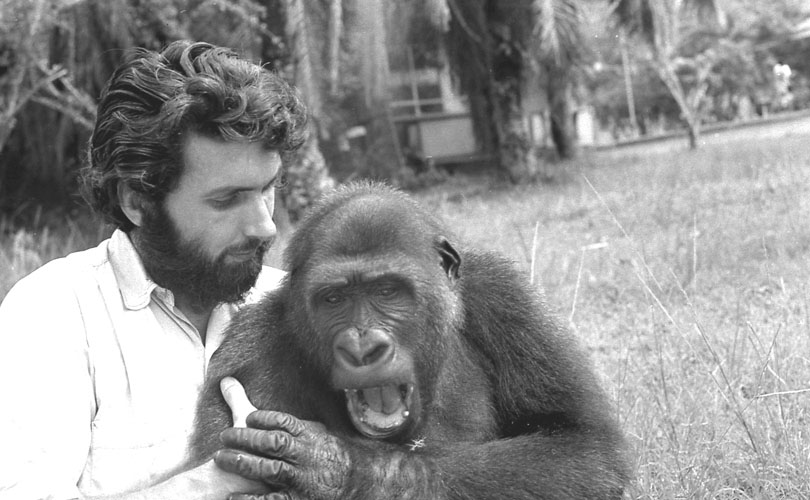
This young male gorilla arrived with the female in the previous picture. Both gorillas had been badly treated prior to arrival - note the burns on the chest of this animal. 18 December 1964.
After consultations with the Nigerian Federal and Cameroon Governments, the Nigerian Government authorised us to confiscate the two gorillas from the Asian traders who had brought them into Nigeria from Cameroon. Late December 1964.
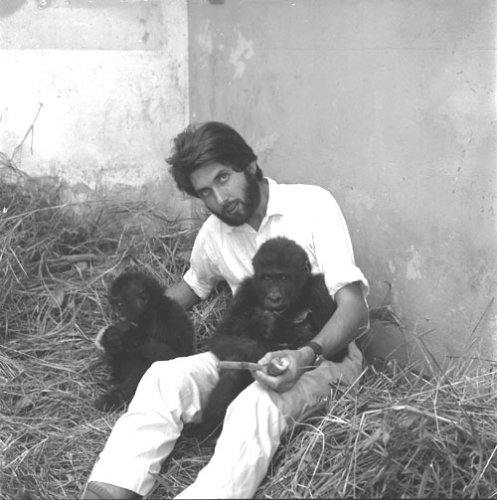
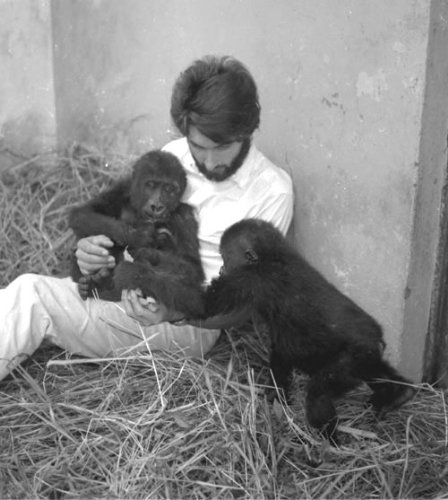
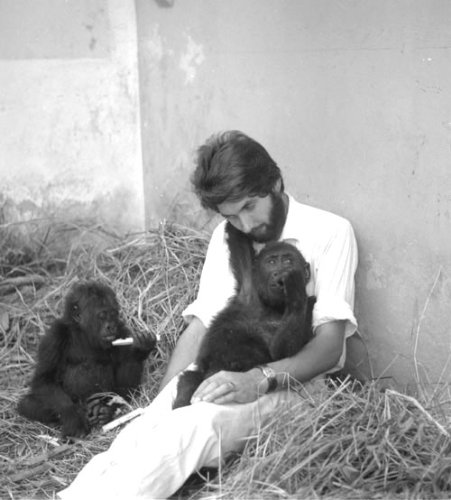
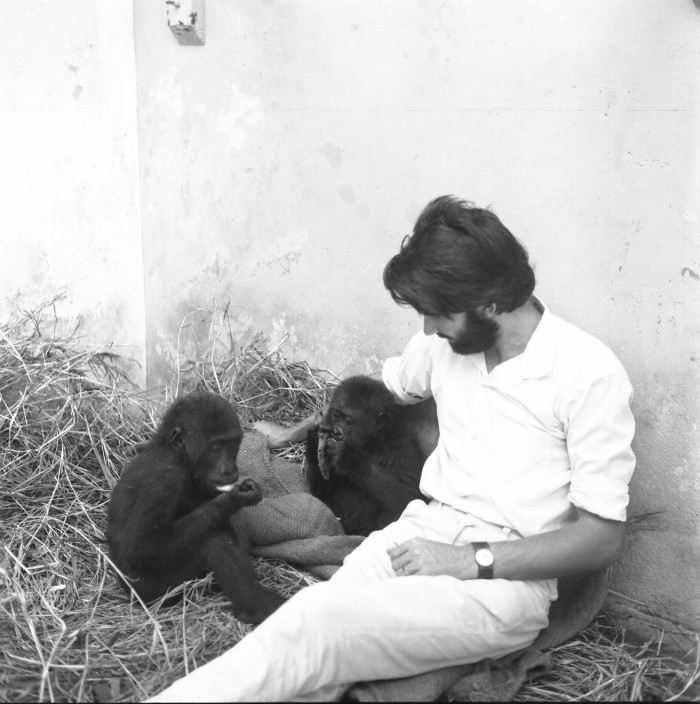
One of the first problems to address was that, due to previous harsh treatment from their captors, both gorillas disliked being handled and were generally very nervous. They bit me and some of the zoo keepers whenever they felt threatened. We therefore spent much time with the animals, quietly trying to gain their confidence and trust. Late December 1964.
Another urgent need was to devise a diet that the gorillas would accept and which would provide for their return to good health and subsequent healthy development. The Veterinary Department of the University of Ibadan worked closely with us at that time - our thanks to Professor Desmond Hill. Late December 1964.
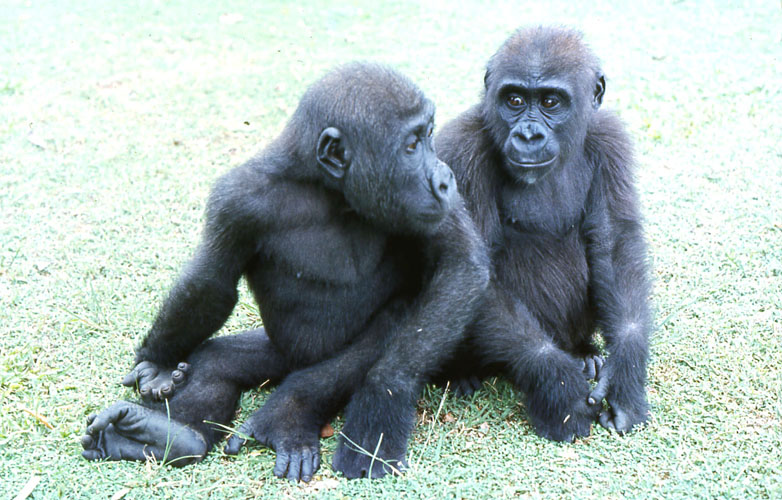
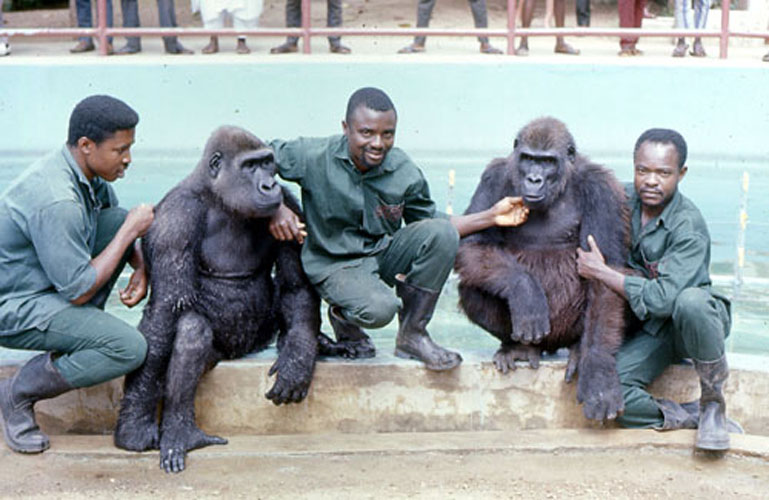
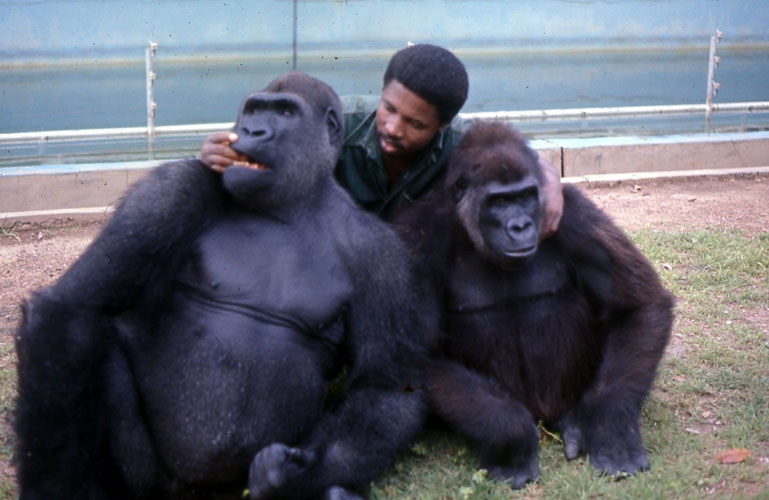
The zoo staff soon selected names for the two young gorillas. The male (left above) was named 'Aruna' and the female 'Imade' (pronounced 'Ee-ma-deh'). We estimated that Aruna was around 2.5 years old and Imade around 1.5 years. Late December 1964.
Over the next few months, both gorillas put on weight and the burns on the chest of the male (Aruna) healed well. On a temporary basis, we kept them in one room of an old animal buliding which we modified for their needs. However, as both gorillas became less nervous of us we began to take them out of their quarters into the zoo grounds and on to an adjacent grassy field. 1965.
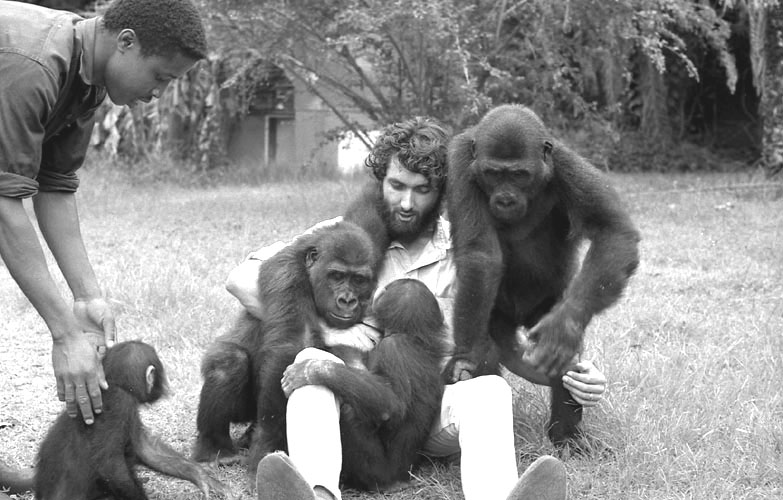
On some of these excursions we also took with us a young male chimpanzee. The three animals played and jostled quite harmoniously although there were occasional minor skirmishes. A team consisting of myself and specially selected zoo keepers were present at all times and kept a watchful eye on the apes' activities. 1965.
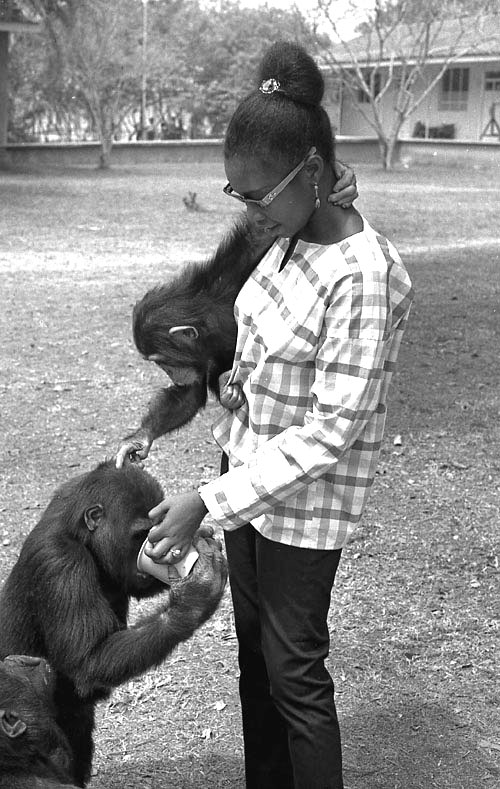
The female gorilla (Imade) takes a nutritious drink. Both gorillas quickly learned how to handle a fluid-filled cup without too much spilling. 1965.
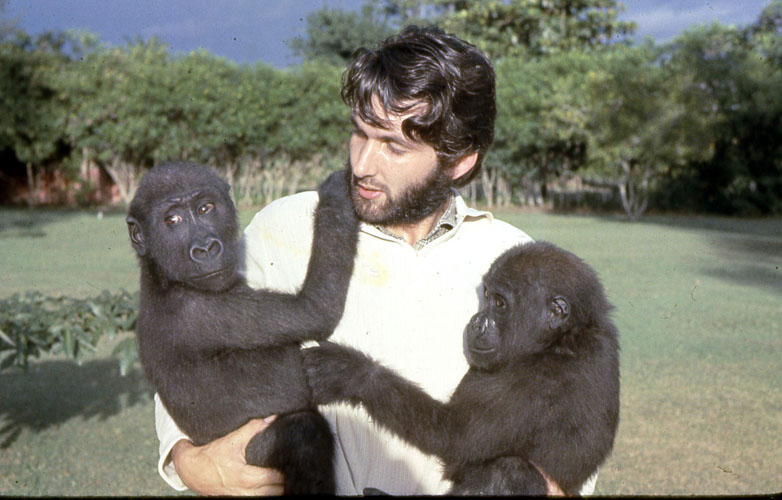
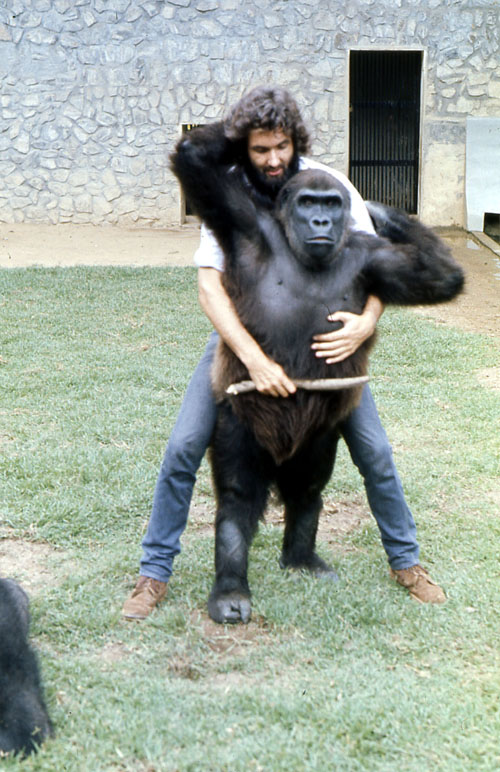
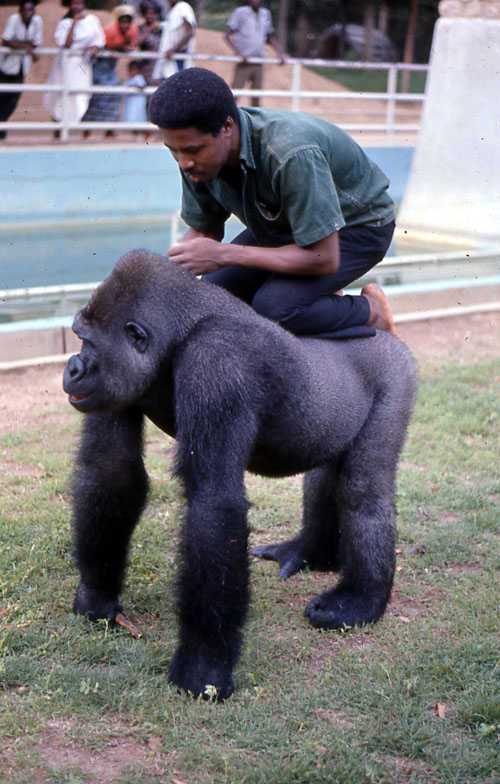
Here I am carrying the gorillas back to their quarters after some vigorous exercise on the nearby grassy field - 1965. While it was impossible to be sure of the exact origin of our two gorillas, we assumed them to be western lowland gorillas (Gorilla gorilla gorilla). We decided it was extremely unlikely that they were Cross River gorillas (Gorilla gorilla diehli), a distinct subspecies from the Nigeria Cameroon border area, formally described and named in 2000.
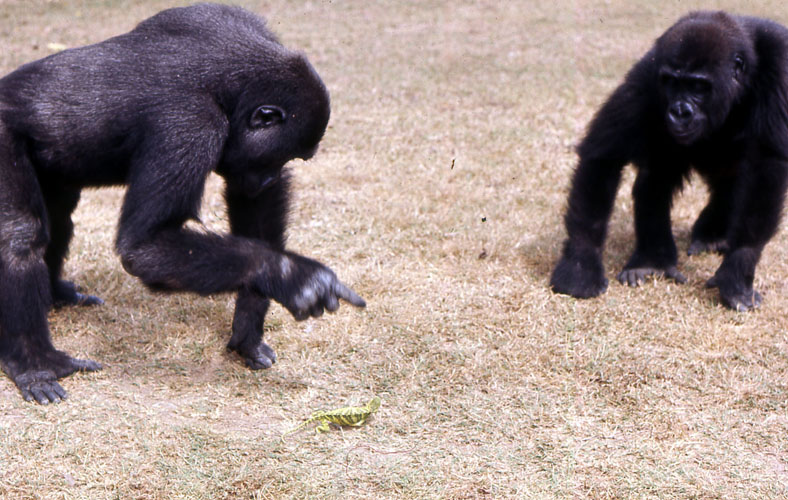
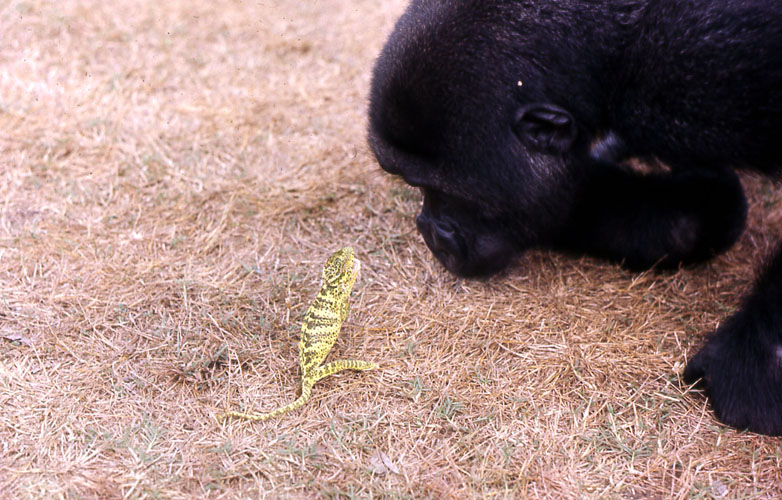
While both Aruna and Imade soon settled well into their new home and routine, and related well to their keepers, it soon became apparent that Imade was much more nervous than Aruna of any new or strange items that entered her domain. Here a chamaeleon has been introduced to the gorillas, and whereas Imade keeps her distance, Aruna is immensely curious and relatively unafraid and soon wants to examine the chamaeleon in more detail. 1966.
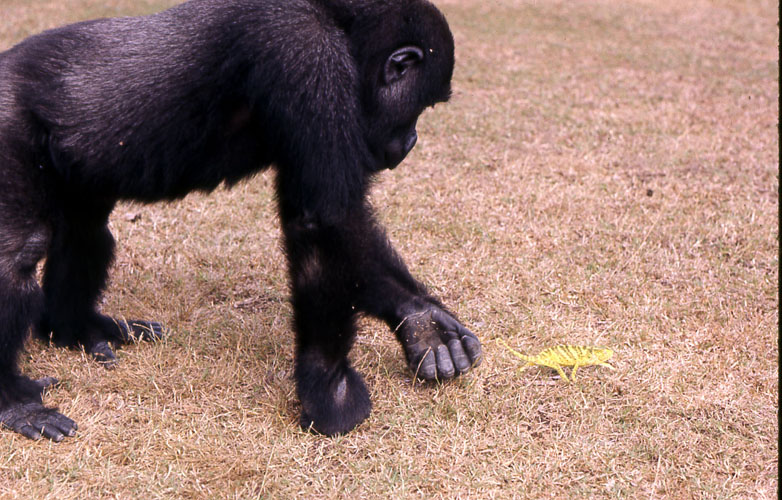
Aruna follows carefully and slowly behind the chamaeleon while plucking up the courage to touch its tail. 1966.
Finally the chamaeleon turns to face Aruna; it rears up, opens its mouth, makes hissing noises and manages to appear quite intimidating. Aruna decides to treat it with more caution.... 1966.
A zoo visitor is allowed to help feed the gorillas and young chimpanzee. 1967.
Michael Iyoha, the senior keeper in charge of the apes, helps keep order. Michael was an exceptionally gifted zoo keeper who was much involved with the care of the gorillas. 1967.
It was around this time (1967) that I realised that serious consideration regarding the future of the two gorillas was needed. The type of ape accommodation that I found at the zoo when I arrived (see above, with chimpanzee) was old, badly designed and totally unsuitable. If the gorillas were to remain at the Zoo, a new building was required incorporating the latest concepts in zoo design. 1967.
CLICK ON THE IMAGES AND THEY WILL ENLARGE, DISPLAYING A CAPTION BENEATH IN WHITE TEXT.
Thus began a period of design research, although within the context of a limited budget for our new ape project, and I consulted with a number of overseas zoos that had also used water moats as ape barriers. In the meantime we continued to take the gorillas out of their temporary quarters as often as possible to keep them active and present them with challenges large and small. 1968.
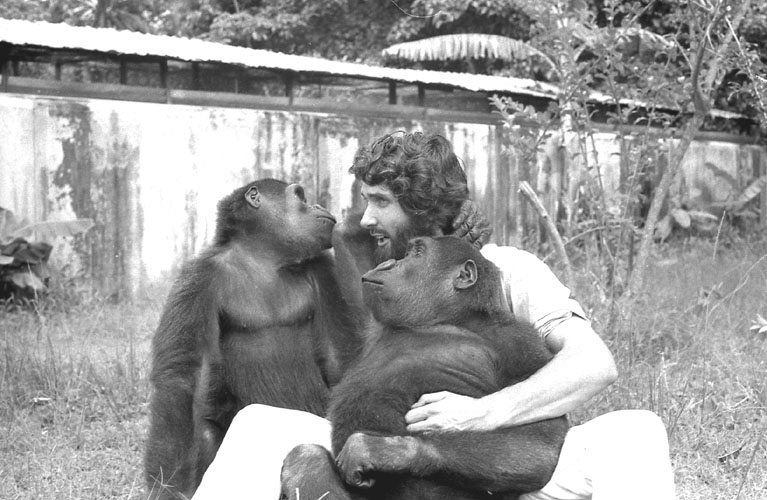
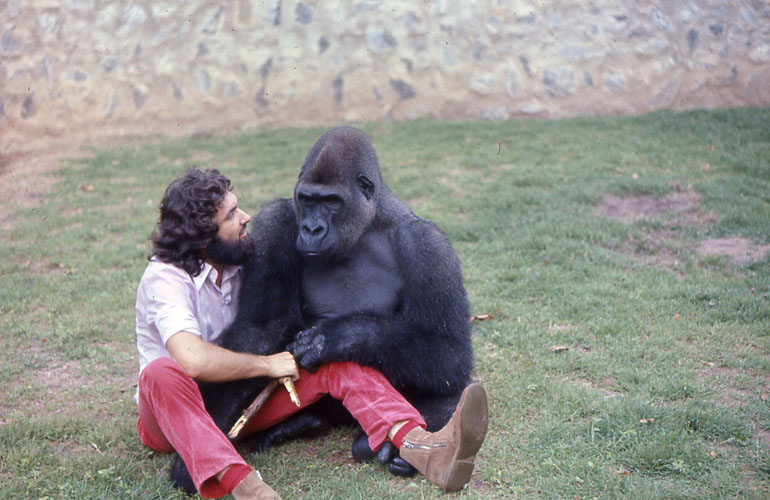
Aruna takes it easy while Imade seems to want to have a quiet word... 1968.
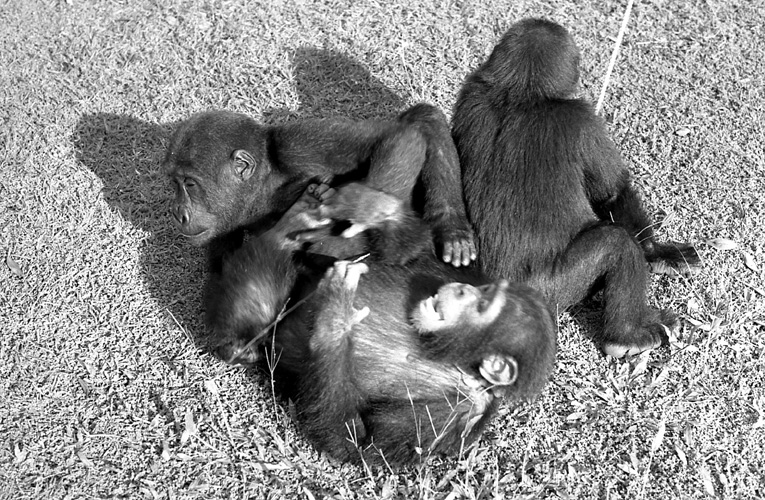
Both gorillas were very ticklish. 1968.
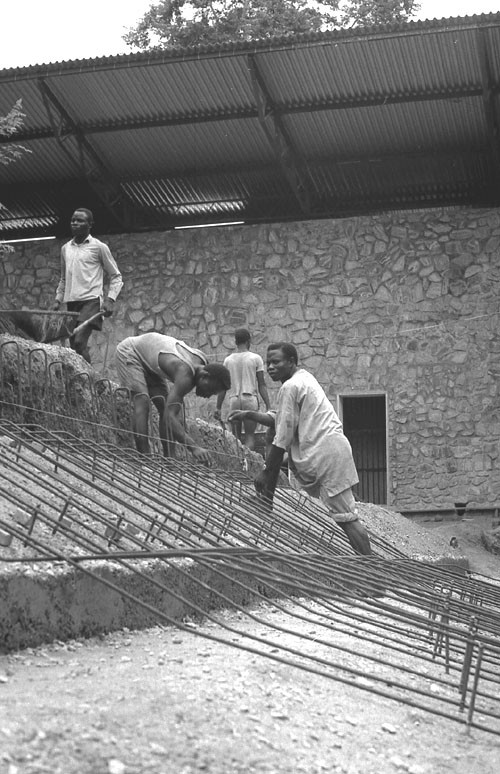
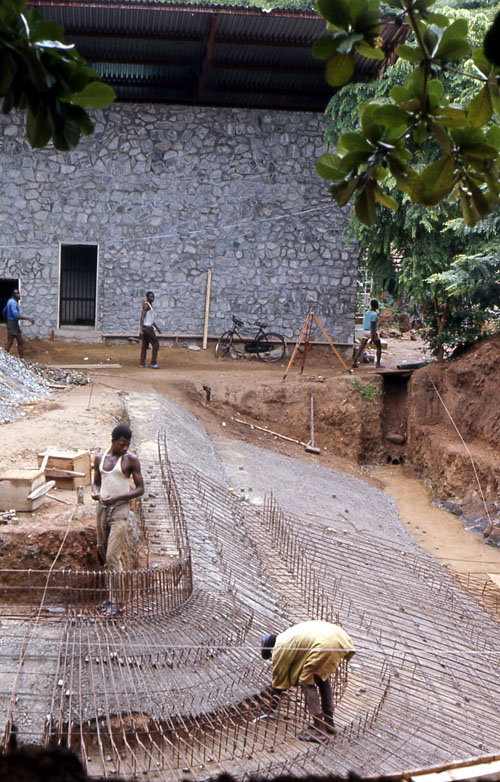
Construction of the new ape building commenced in 1969. The area of land available for this project was somewhat limited by existing features and we were having to keep within a budget made specially available by the University. 1969.
Note the large roof overhang from the main building to provide shelter within the outside ape enclosures from sun and rain. The metal-work for the moat is being prepared in the foreground. 1969.
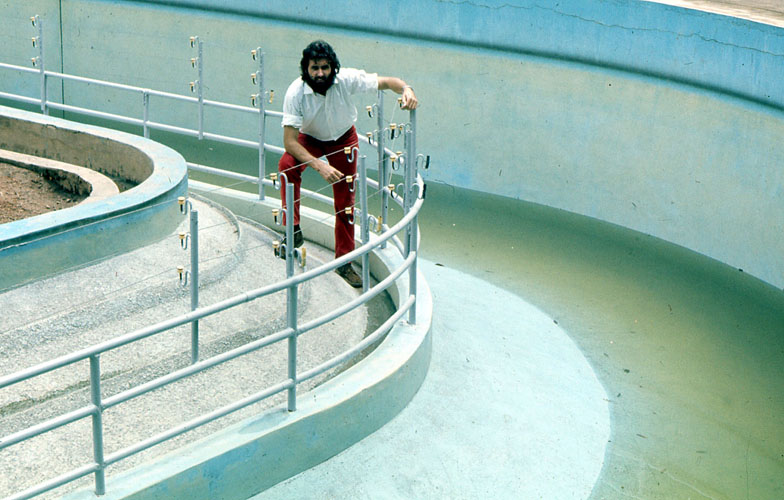
Showing the design of the moat. The inner section, to which the apes had access, had a roughened floor plus three raised ridges to provide a foot/hand hold if needed; the gradient and depth had been carefully researched and assessed. After a few very minor modifications, the moat worked perfectly as a gorilla and chimp barrier, with the physical barrier below, and the electrified barrier above, water. This photo was taken a year or so after construction when we emptied the moat for cleaning.
he gorillas and chimpanzees were released into their respective outside enclosures for the first time in March 1970. Again, you may wish to read/download the article decribing events during those first few days by going back to the University of Ibadan Zoo introductory page, clicking on 'Zoo Publications by Bob Golding', then on 'A Gorilla and Chimpanzee Exhibit.'
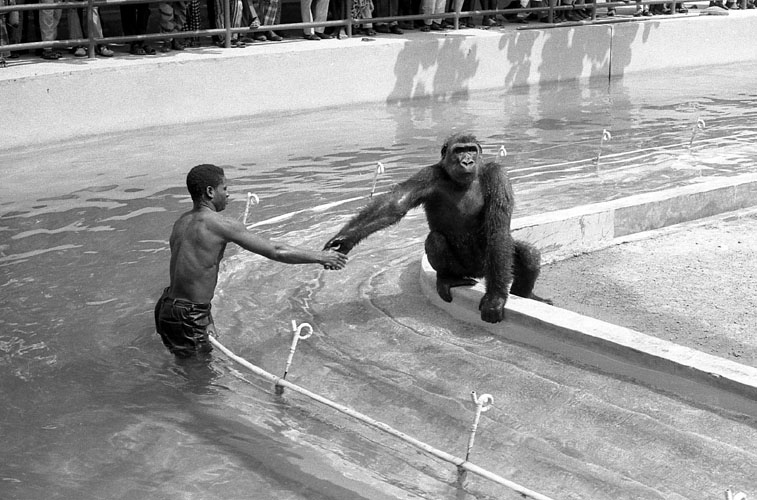
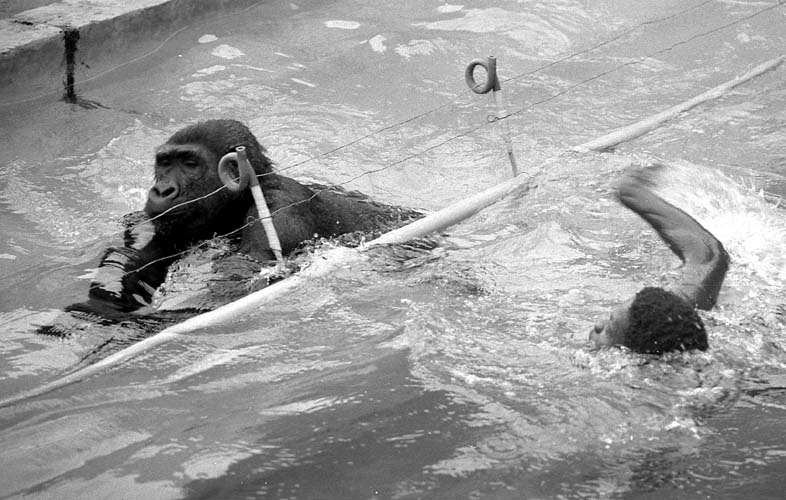
Patrick was not a zoo keeper as such. His duties were to prevent visitors throwing things into the two ape enclosures and to keep basic notes of any unusual behaviours or events; also to maintain the moat and its filtration and chlorination systems. However, because his duties included having to swim in the moat, he developed a good relationship with the apes from across the electrified barrier. 1970.
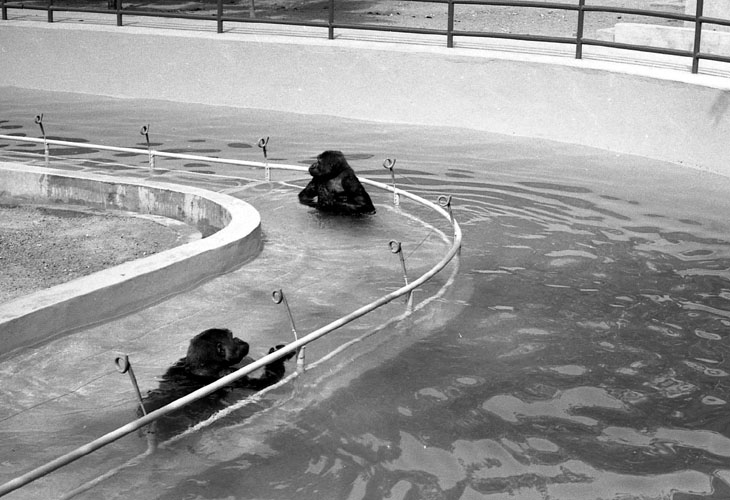
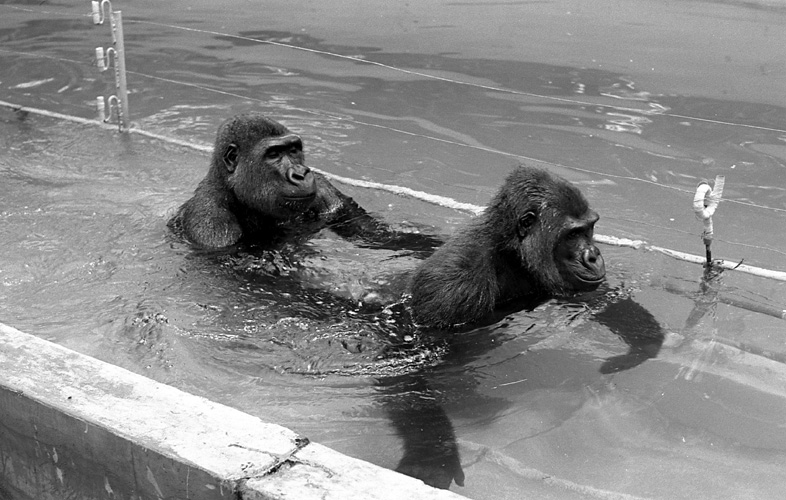
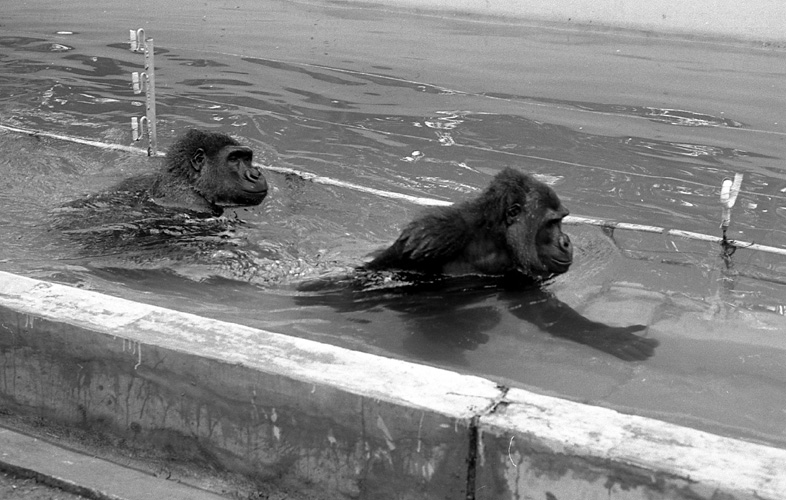
What surprised us was that within a few days of having access to the moat, both gorillas were entering the water with increasing enthusiasm. As their confidence increased, they began to see how much noise they could make by hitting the water with their hands or by jumping into it. 1970.
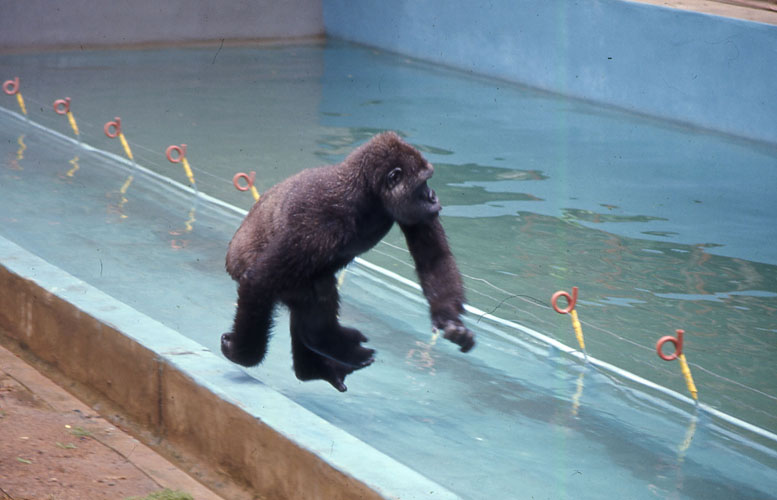
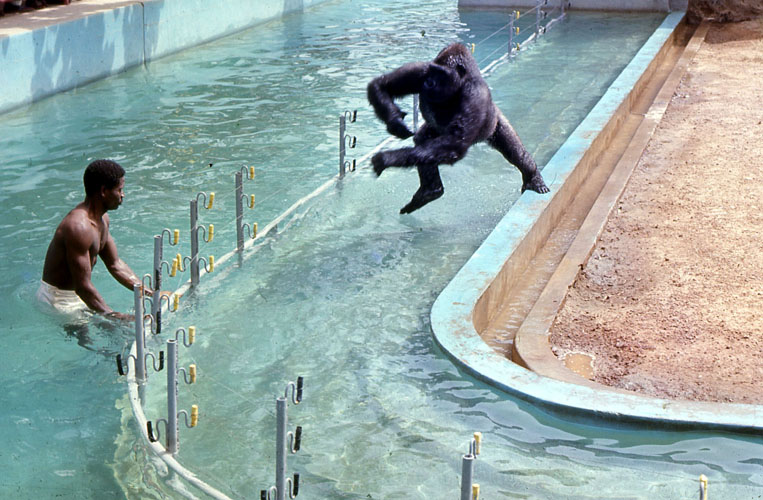
Here Aruna takes a running jump into the water. He seemed to take great pleasure in making as big a splash and as much noise as possible. It is often stated that gorillas are afraid of water, or will not enter water, whether in the wild or under zoo/captive conditions. While this clearly did not apply to Aruna and Imade, it is worth mentioning that our chimpanzees always avoided getting wet and only entered their moat under occasional extreme duress. 1970.
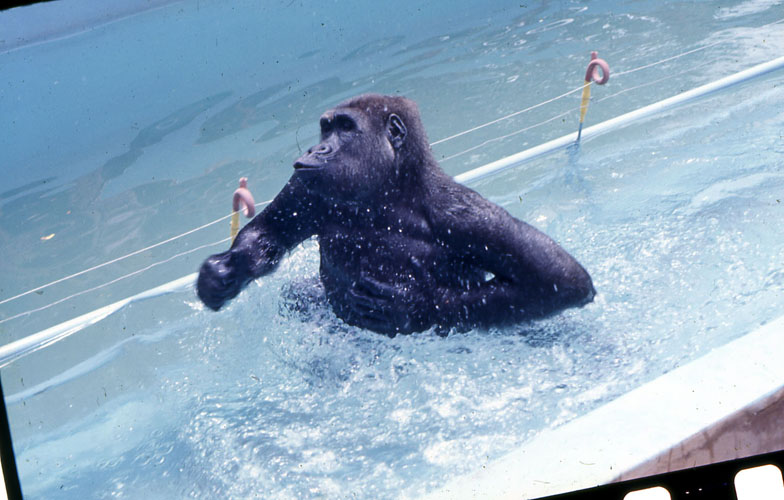
Aruna beats his chest - and the water... 1970
Aruna soon showed an interest in interacting with Patrick while both were in the water, although of course from his side of the barrier. Aruna learned to grasp an underwater rail and pull himself sharply forward or push with a foot against the roughened moat floor. 1970.
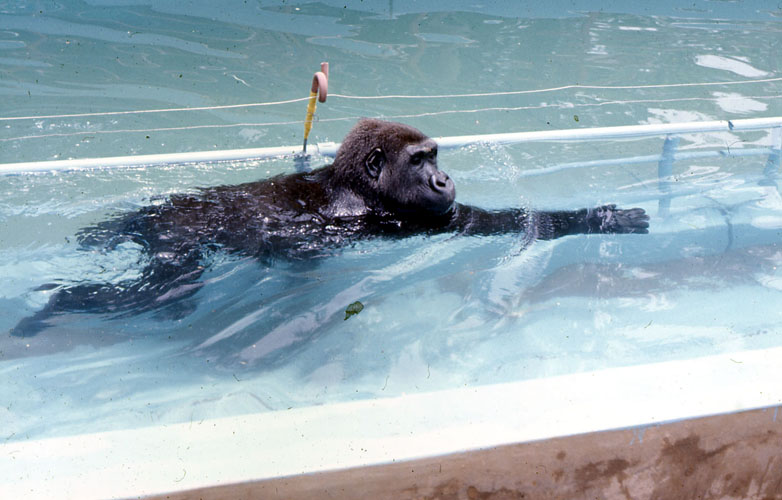
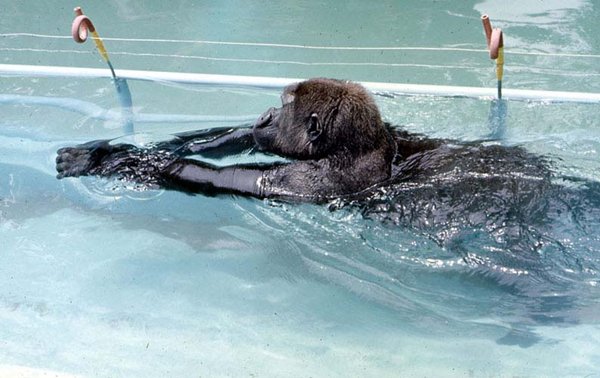
As time went by, Aruna became more and more skilled at moving through the water, which he appeared to enjoy. After kicking off from the moat bottom or pulling on the underwater barrier, he seemed to be able to propel himself over a greater distance by stretching one or both arms out in front of him. 1970.
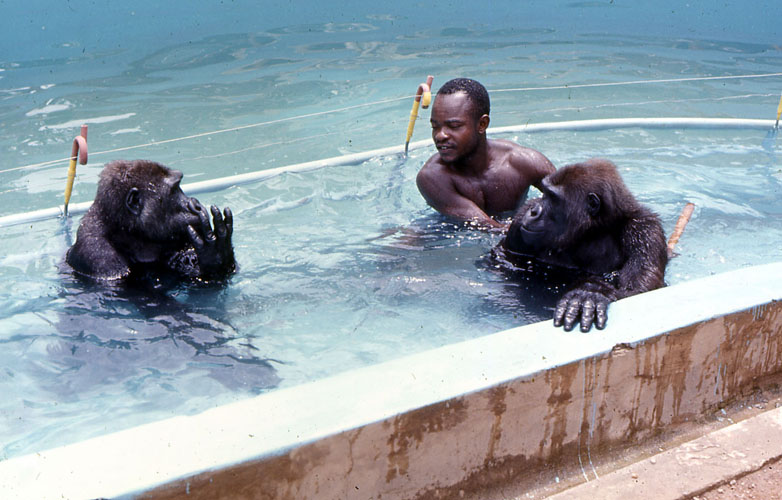
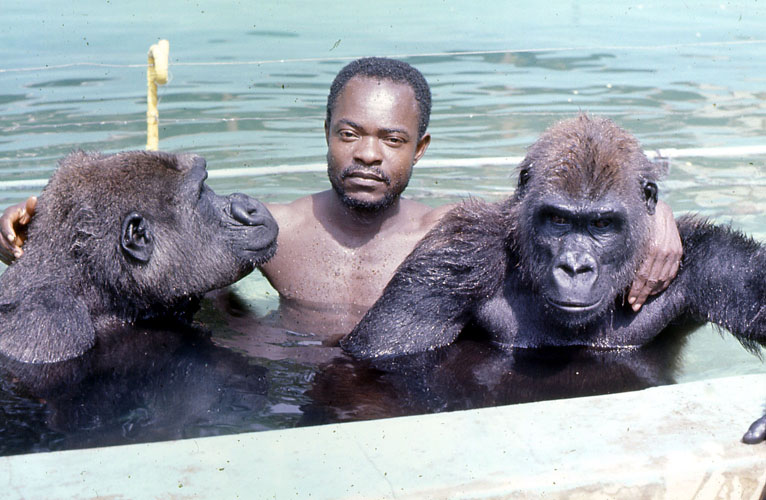
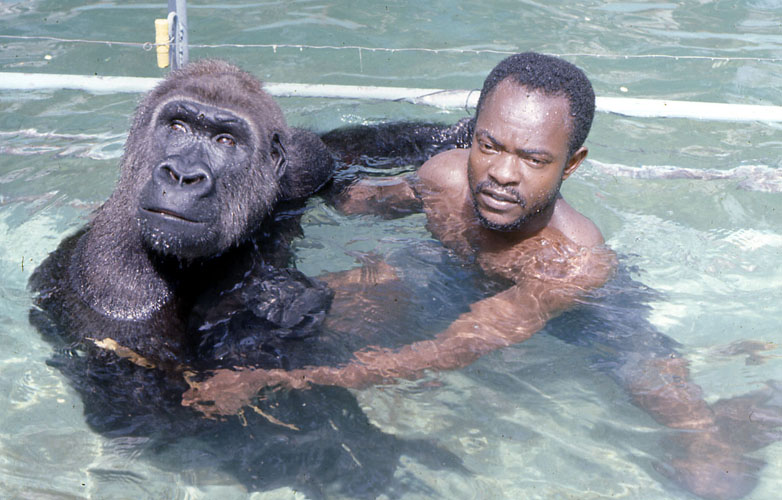
Augustine Udoh was one of the three ape keepers and here he joins the gorillas in the moat. The moat water was filtered, chlorinated and circulated to maintain hygiene. 1970.
Michael Iyoha was the senior ape keeper. This photo was published in the London Daily Telegraph newspaper. 1970.
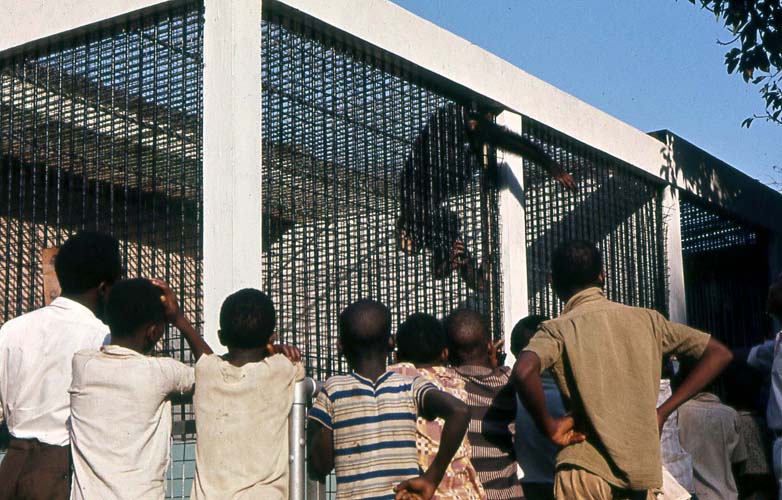
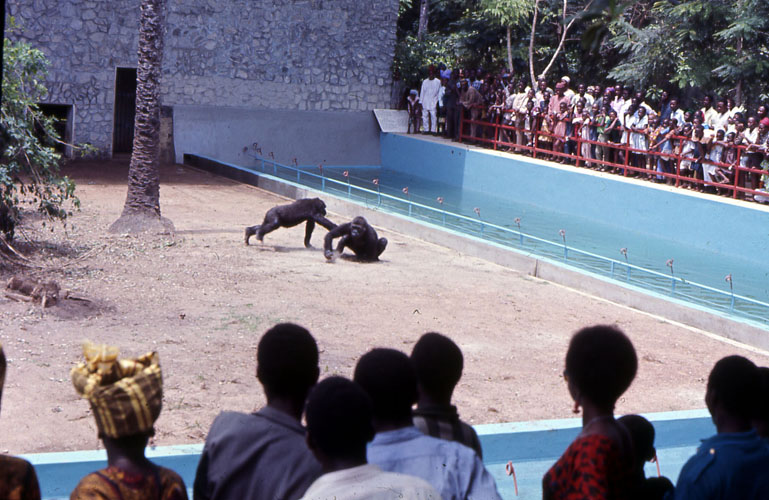
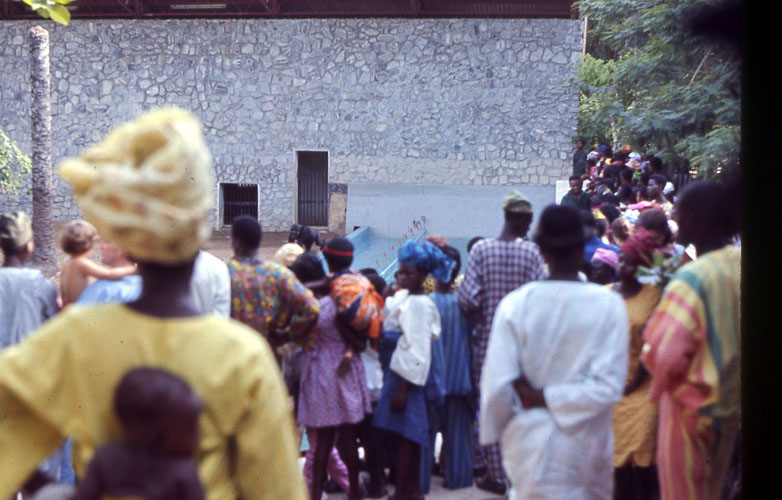
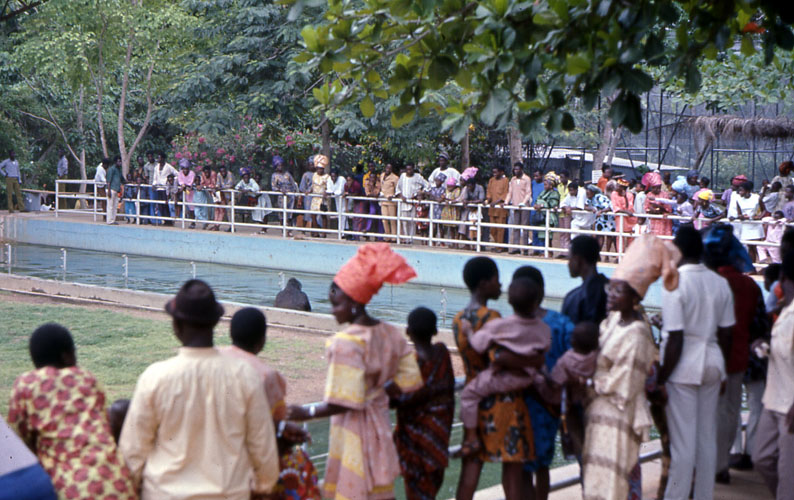
The new gorilla and chimpanzee exhibit immediately attracted large crowds of visitors to the Zoo. This photo was taken at Easter 1970, very soon after the opening of the new ape building. Zoo visitors were not allowed access to the ape accommodation within the building - we decided to provide privacy for the animals in those areas.
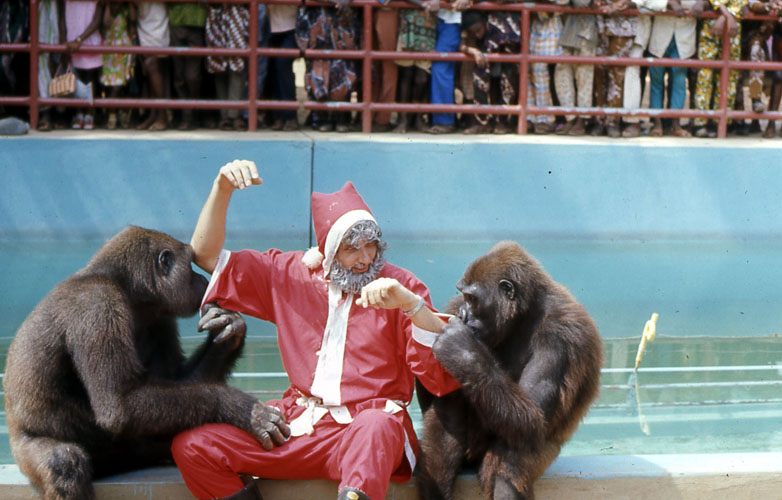
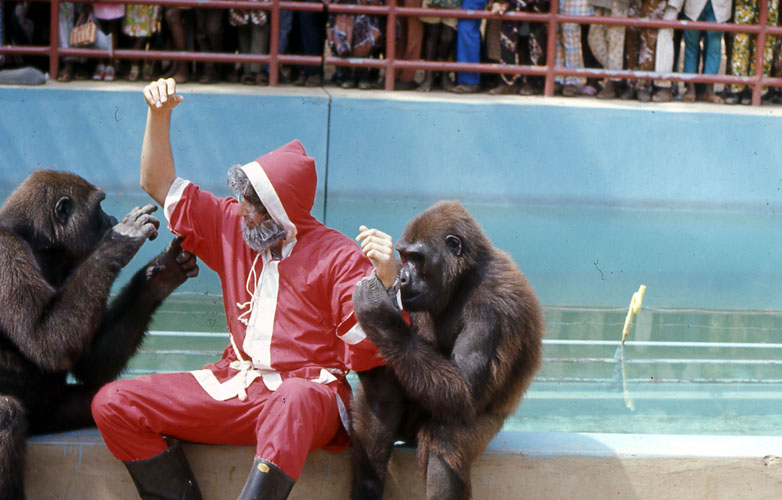
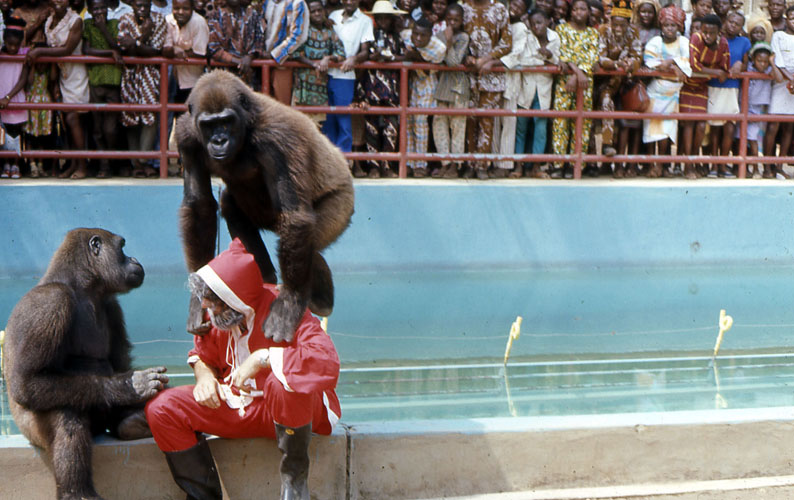
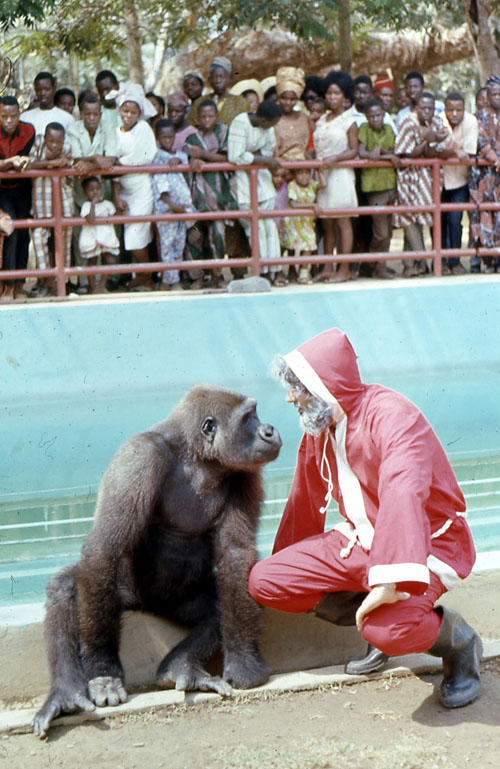
At Christmas 1970 I was Father Christmas for the children of the staff living on the campus of the University of Ibadan. After I finished delivering Christmas gifts on Christmas morning, I decided to visit the gorillas. At first they didn't recognise me and were quite aggressive towards me. It was only after I spoke that they realised who I was and allowed me to enter their enclosure. 1970.
Aruna and Imade remained intensely curious of my strange garb and continued to examine me in great detail. 1970.
Now she's sure who I am, Imade relaxes and decides to teach me a lesson. It will be seen in these Christmas pictures that Imade has pulled out some of the hair over her biceps area. She very occasionally did this, each period lasting a couple of months or so, and then suddenly stopped. We were never sure of the reason for this - certainly we could find no trace of disease or infection. 1970.
Happy Christmas! Christmas Day 1970.
These three ape keepers built up very close relationships with the gorillas and also our group of chimpanzees. From the left is senior keeper Michael Iyoha, Nicholas Eze and Augustine Udoh. 1971.
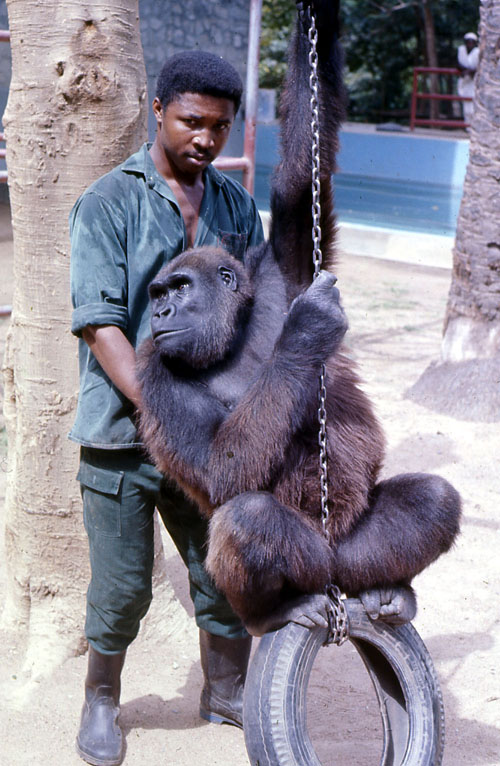
When the outside enclosure was newly opened we left a number of trees for the gorillas' use. However, we soon added a number of climbing frames, platforms and other apparatus. 1971.
The gorillas continued to develop their abilities to make as much and varied use of the water as possible, although the male, Aruna, was more resourceful and adventurous than Imade. 1971.
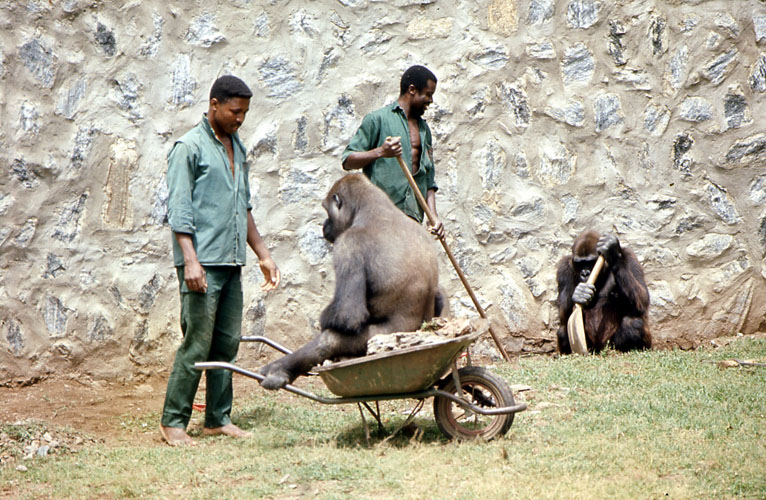
Naturally, the enclosures were cleaned every day, but occasionally a rather more thorough tidy up was necessary. 1971.
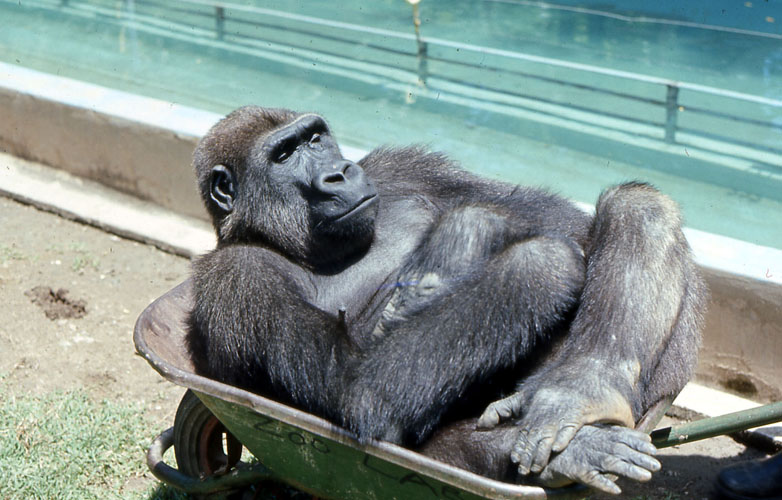
Whenever he thought the keepers weren't looking, Aruna grabbed an empty wheelbarrow and snuggled inside it with evident delight. 1971
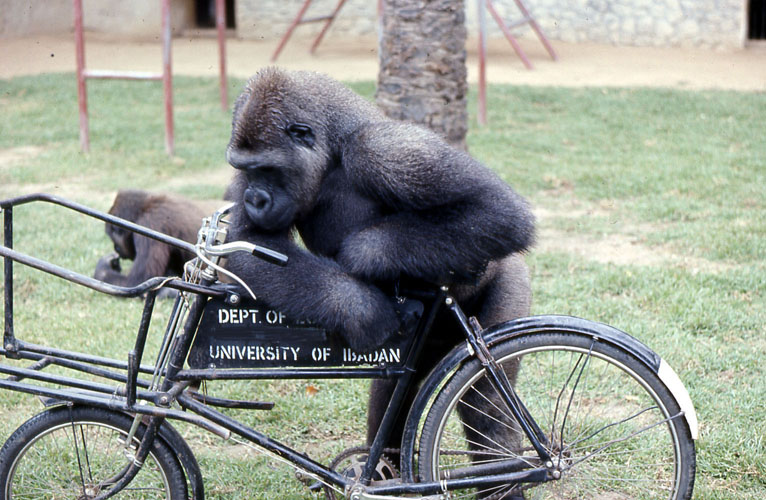
Aruna spent much time with this bicycle whenever he could (only when keepers were present), and it has to be said gave a strong impression that he was trying to work out how to ride it as he had seen his keepers do. 1971
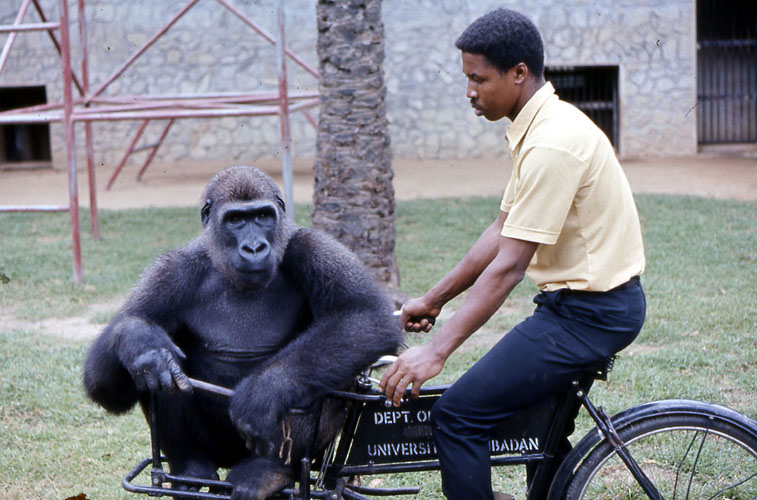
runa didn't get very far with his cycling efforts but was quite content to go along for a ride. 1971.
Aruna follows Imade as they set off through the water. 1971.
They try a little harder and their speed picks up. 1971.
Augustine joins the gorillas in the water. 1971.
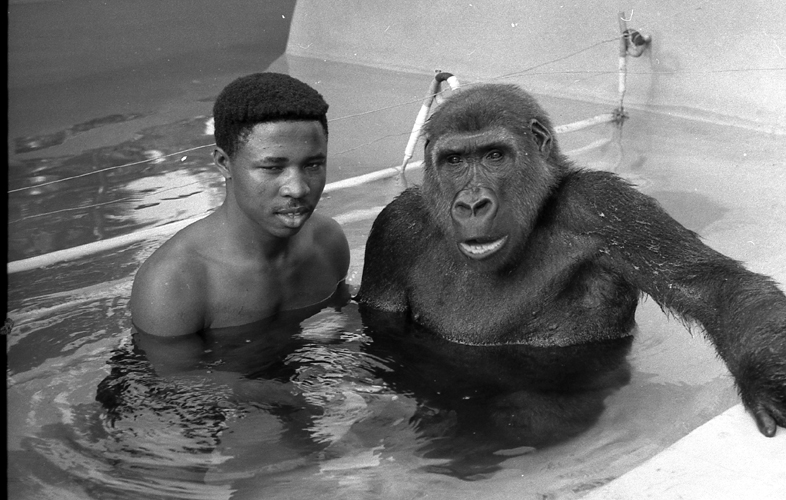
Augustine and Aruna. 1971.
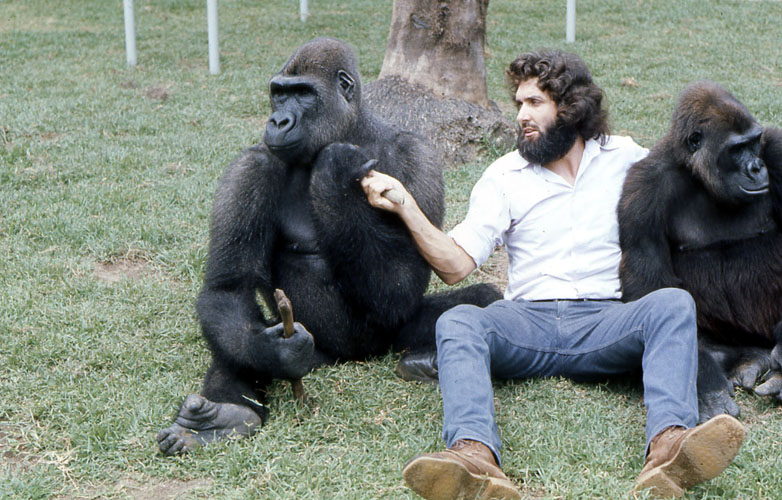
I was careful to maintain a close relationship with both gorillas and spent time with them whenever I could. Aruna and Imade generally maintained good health and the University Department of Veterinary Medicine provided an excellent veterinary service whenever this was needed. 1972.
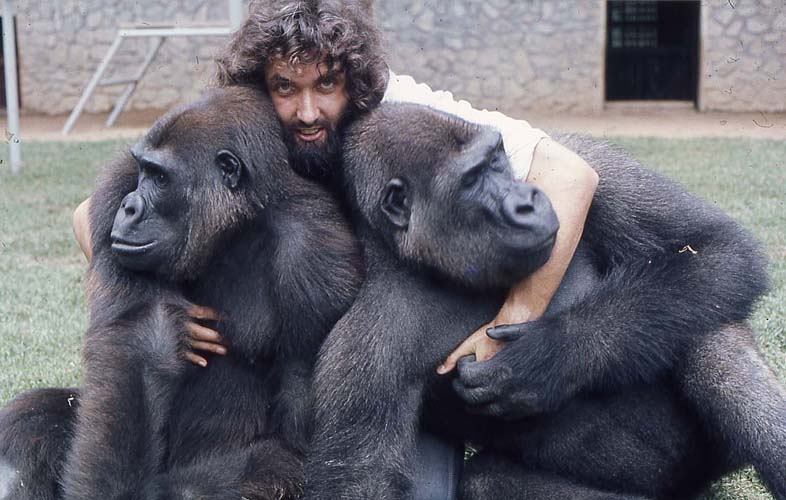
Imade was now too big and heavy to lift but there was nevertheless much physical contact which the gorillas seemed to enjoy and often initiate, even if it was in boisterous play. 1972.
By this time, what I can only describe as a strong bond existed between me and the two gorillas. I hesitate to apply human terms and values, but very often when I sat quietly with Aruna and Imade, usually in physical contact, a certain calmness seemed to envelop the gorillas, and perhaps me too, and sometimes we just sat there for many minutes, relaxed and doing nothing in particular, just watching the zoo visitors go by..... 1972.
The ape exhibit continued to be a popular attraction, especially the 'swimming' gorillas, and attracted visitors to the Zoological Garden from all over Nigeria. By 1979 the Zoo was receiving nearly a quarter of a million paying visitors each year, more than any other public attraction of any kind in Nigeria. April 1973.
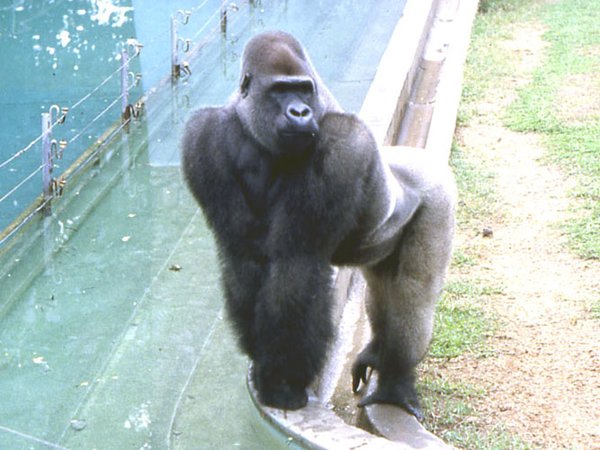
Aruna began to develop some of the physical features of an adult male gorillas. 1973.
Michael Iyoha with the gorillas. 1973
Michael takes a ride. 1973.
Aruna, July 1978.
Aruna giving a good impression of a swimming gorilla. Sometimes he did seem to be very nearly swimming, but as I had designed this inner section of the moat to provide an accessible, non-slip foothold for the gorillas when in the water, I cannot state with certainty that they could swim. However, their arm and hand movements did often seem to increase their forward movement, with their feet briefly clear of the moat floor. 1970. THIS IS THE END OF THE STORY OF THE GORILLAS.