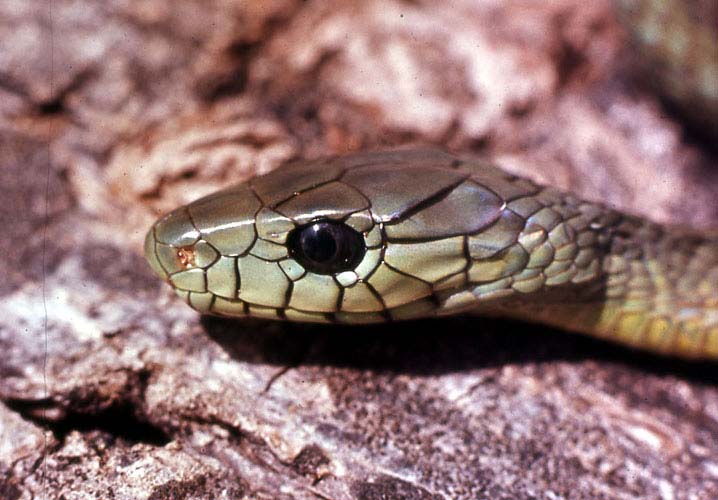
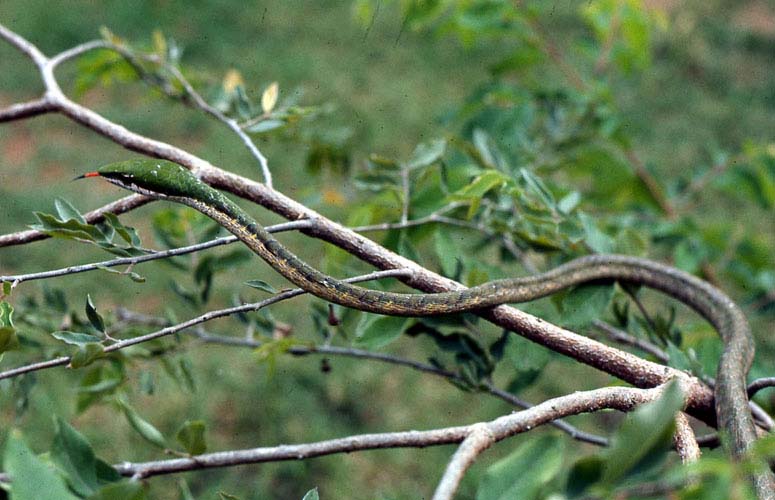
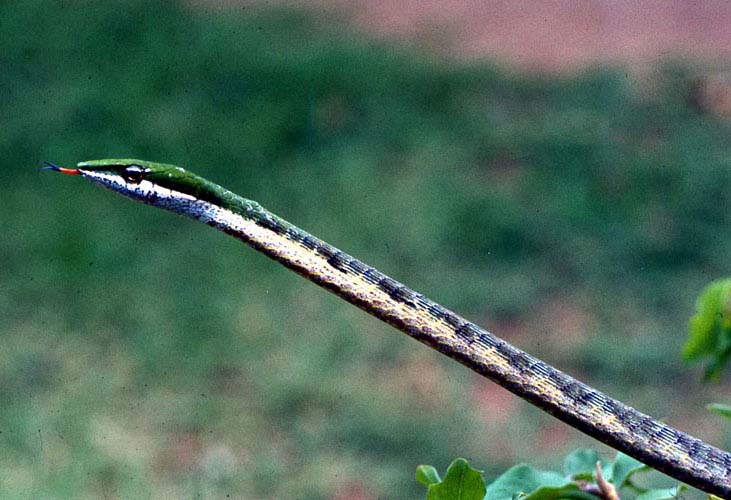
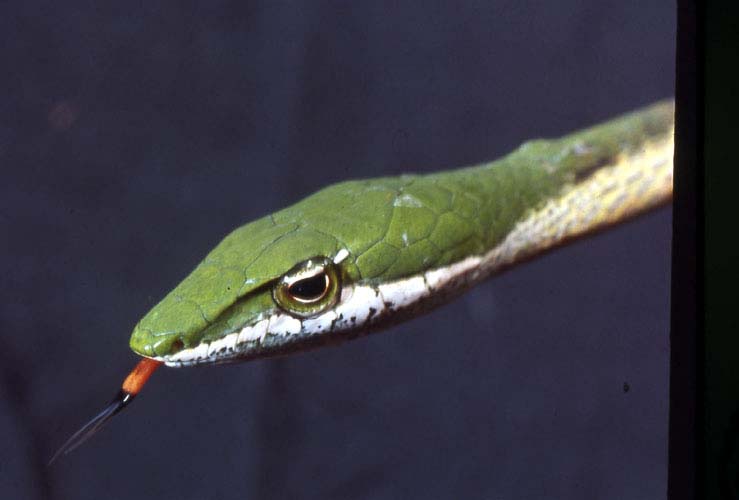
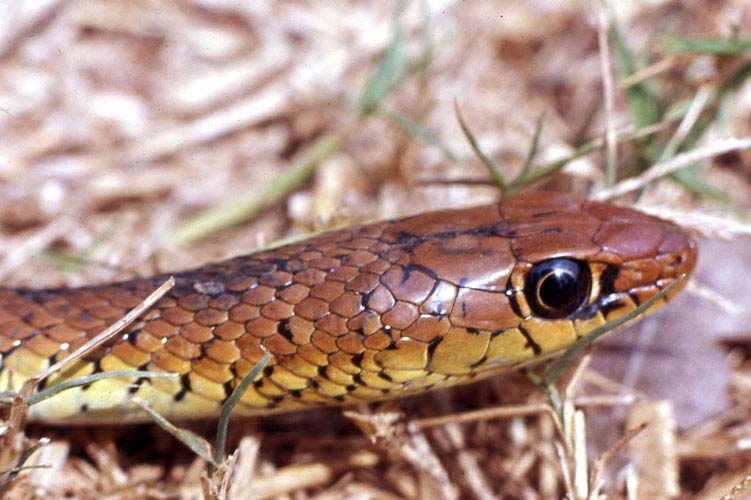
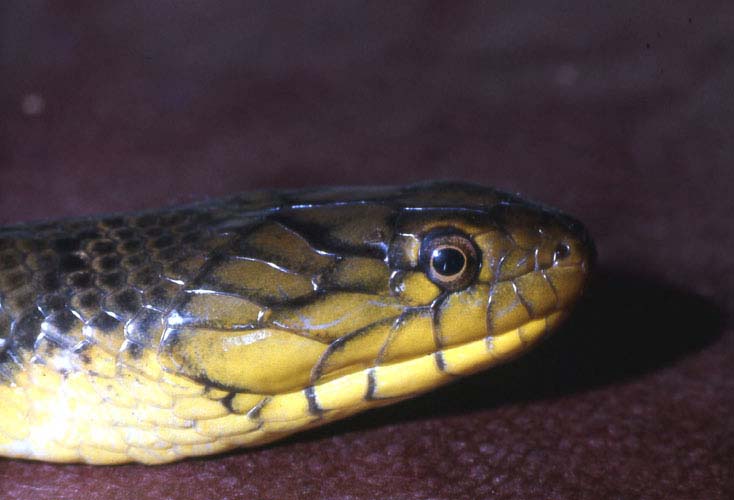
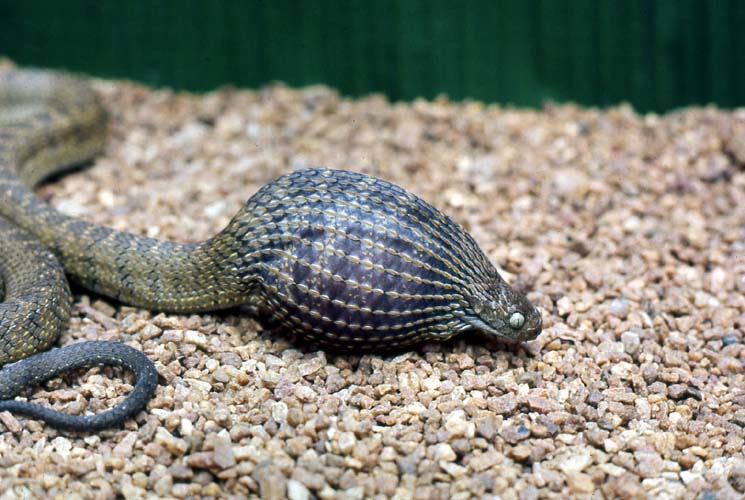
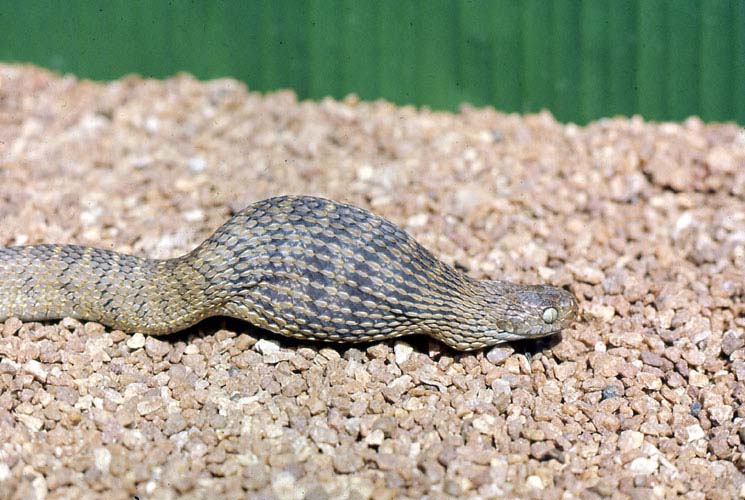
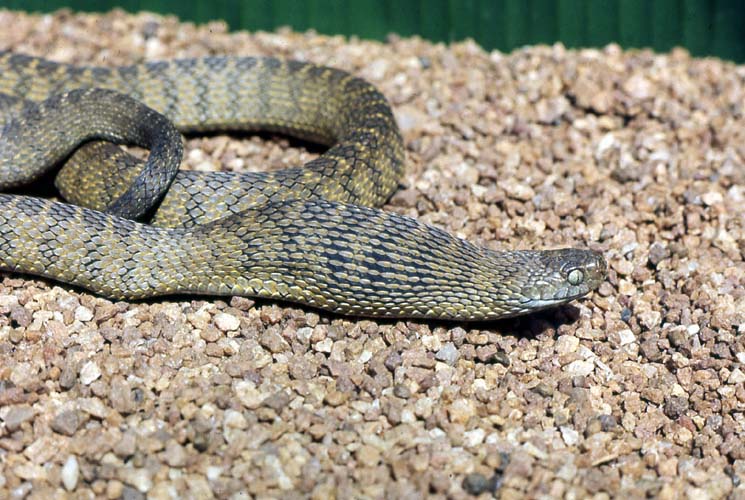
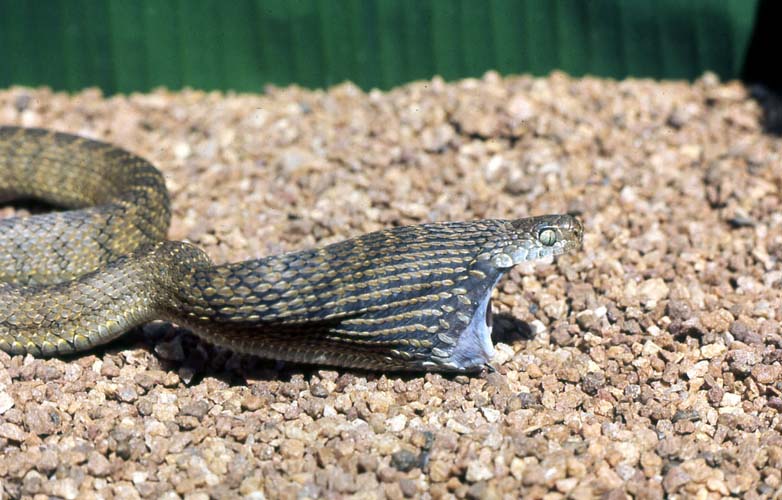
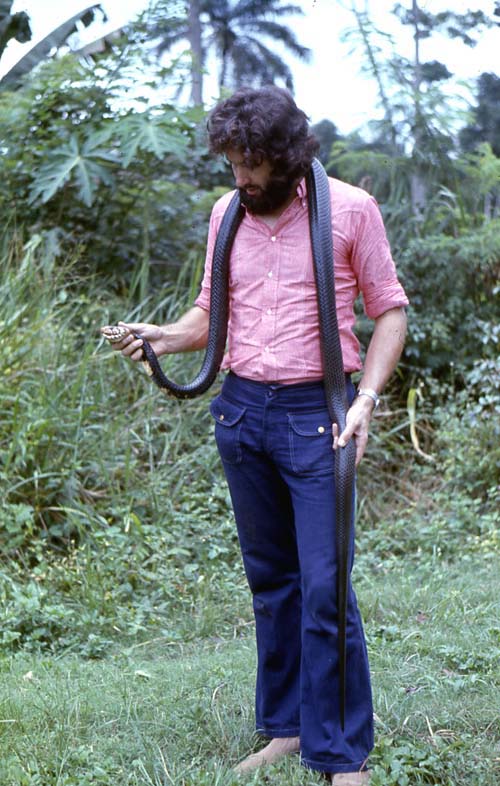
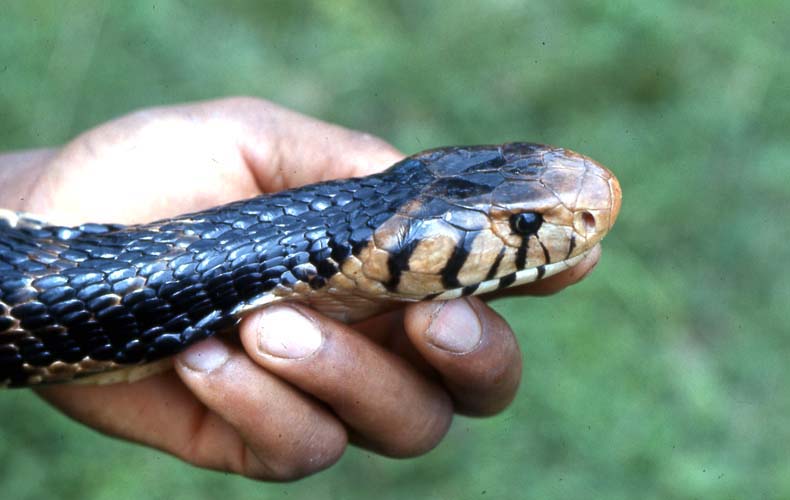
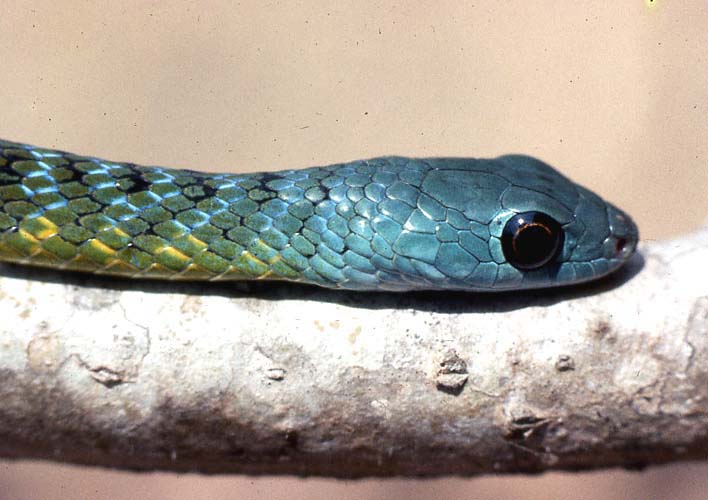
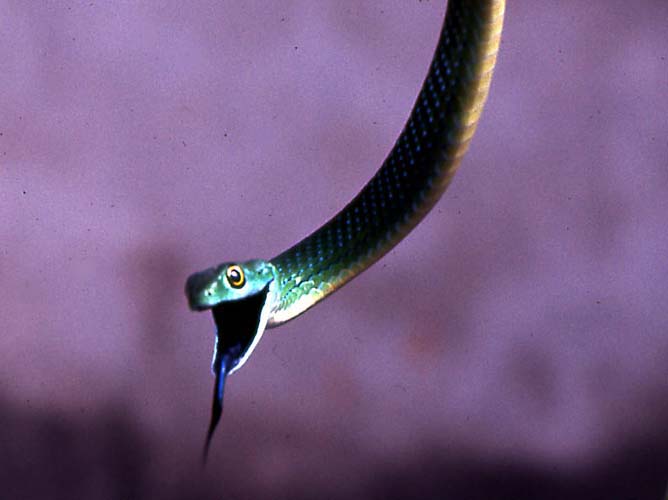
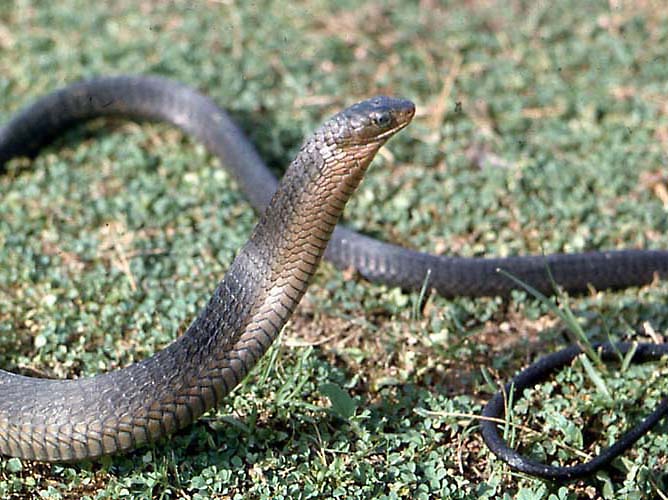
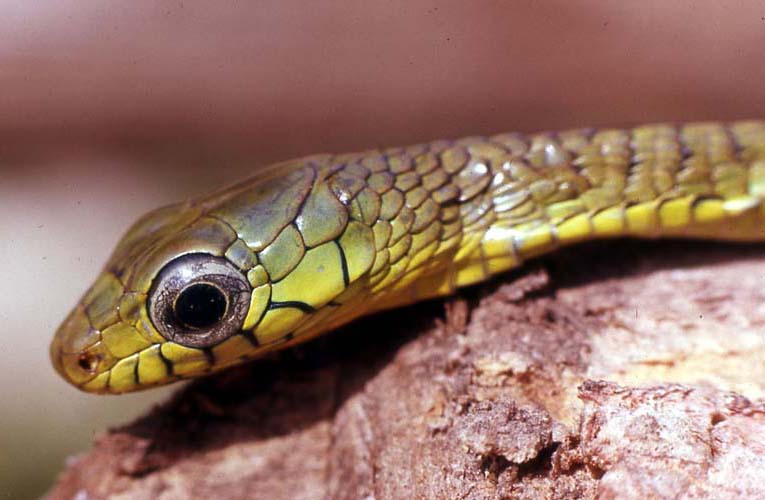
Head of green mamba (Dendroaspis jamesoni). This snake spends much time in shrubbery and small trees but is equally at home on the ground where its speed and agility make it difficult and dangerous to try to capture. One of the keepers at the University of Ibadan Zoo was once bitten by a green mamba when travelling from Lagos and undoubtedly would have died had we not had the correct antivenom available. Ibadan, June 1964.
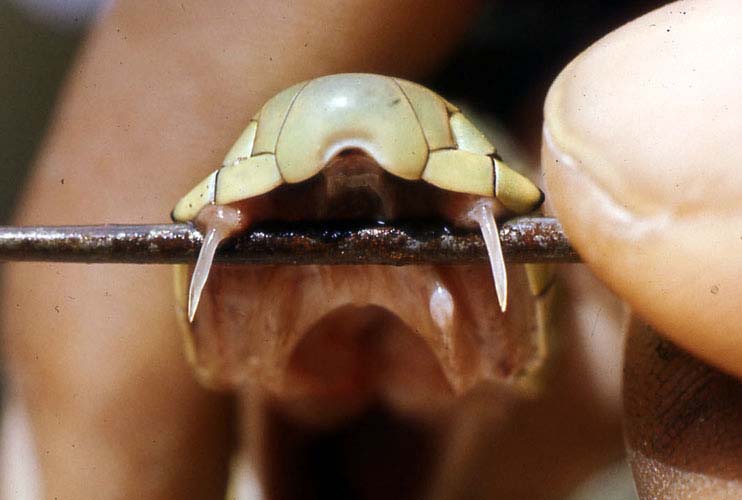
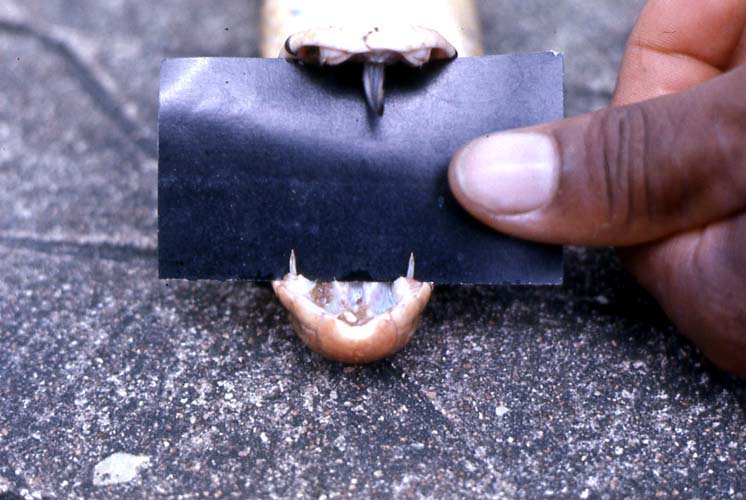
Fangs of green mamba (Dendroaspis jamesoni). The fangs of the mambas and cobras are fixed (immovable), unlike those of the vipers which are hinged (see a viper's fangs on page 6 of this section). The fangs are hollow and deliver a neurotoxic venom. The speed of the mamba and the toxicity of its venom make it a very dangerous snake, including to humans. Ibadan, 1968.
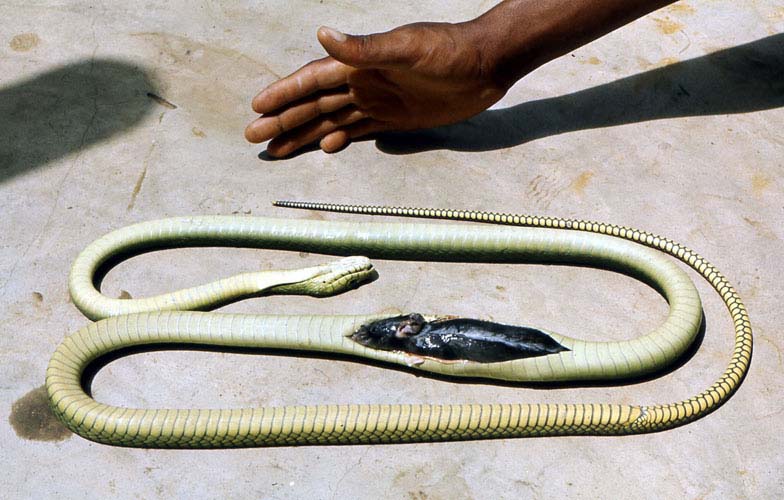
Green mamba (Dendroaspis jamesoni). Killed on the University of Ibadan campus and then cut open to reveal its most recent meal - a black rat. February 1968.
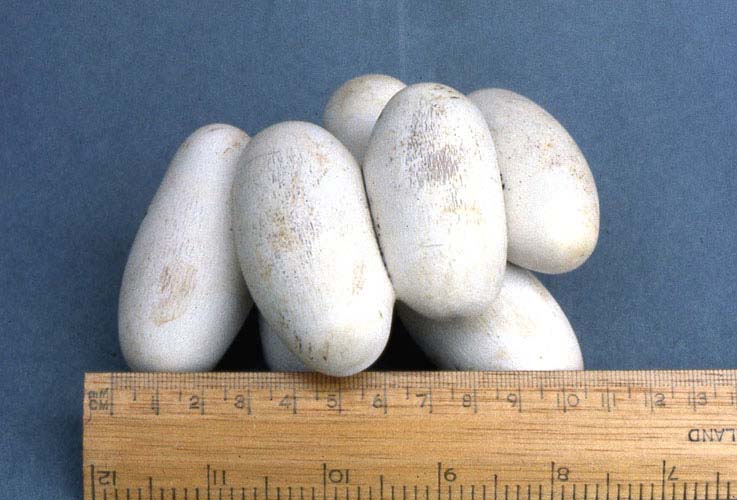
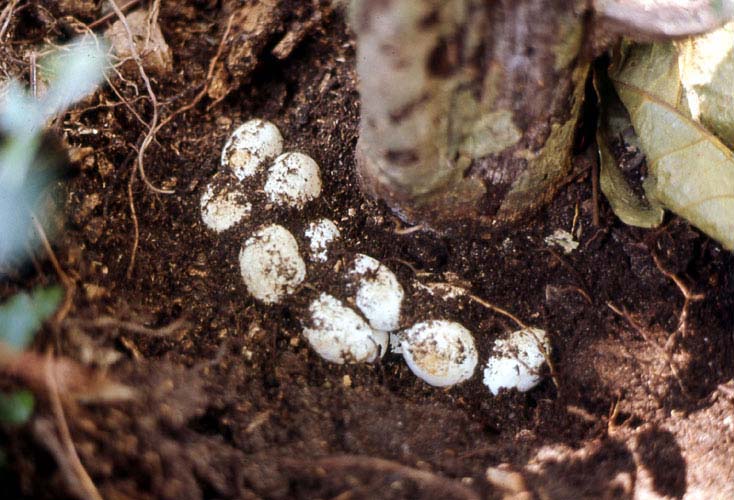
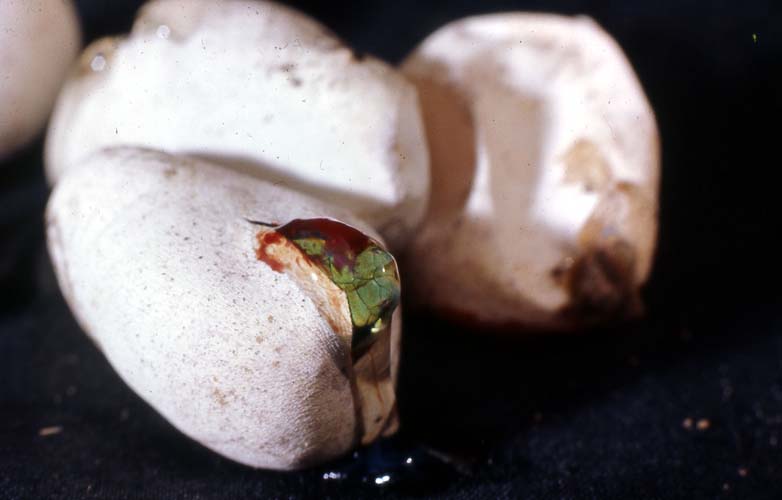
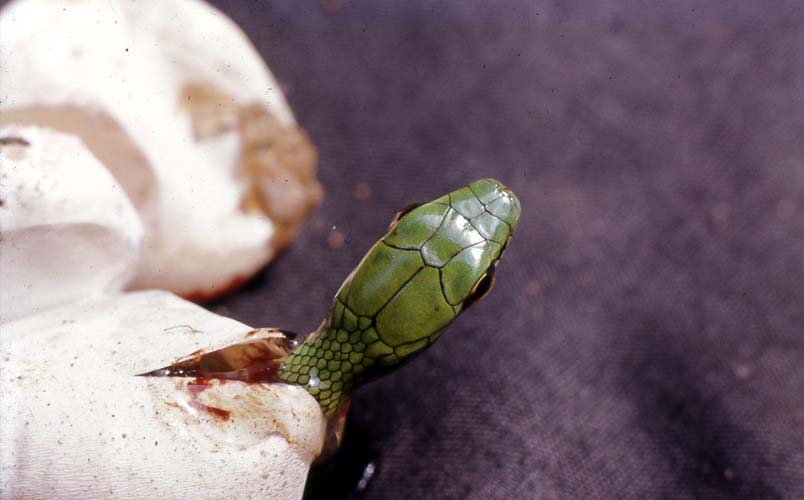
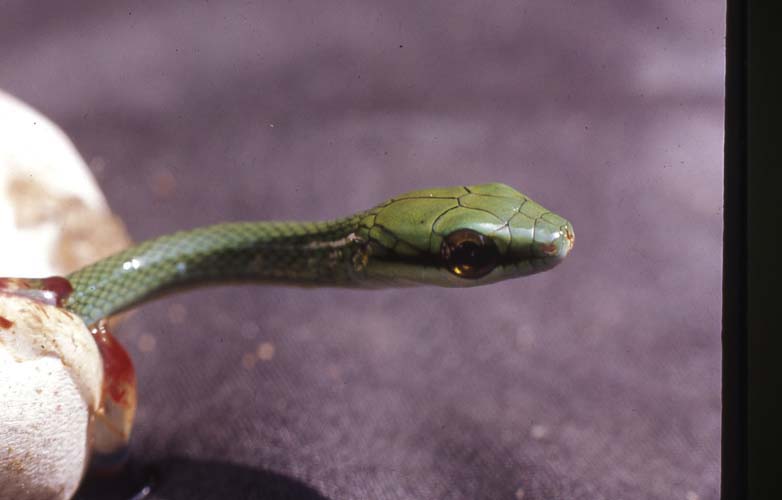
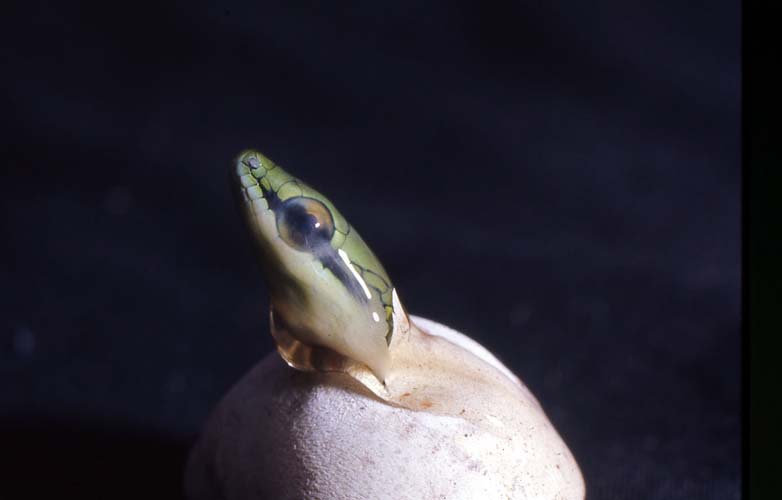
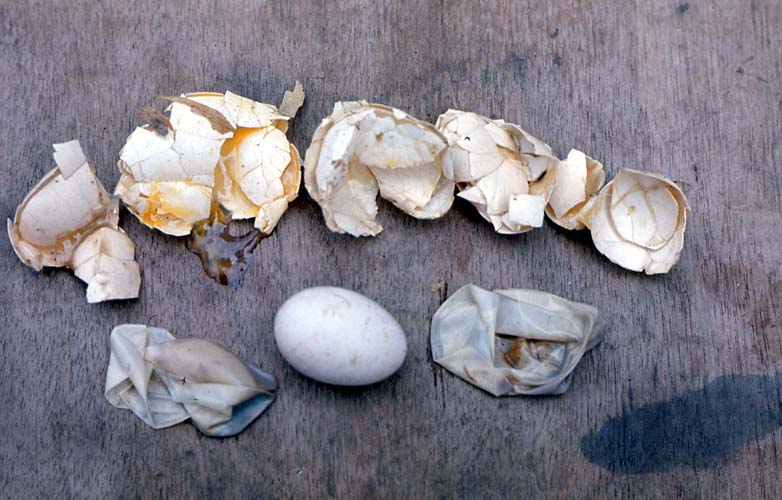
Eggs of green mamba (Dendroaspis jamesoni). Brought to the Zoo by local resident in Ibadan on 10 April 1965 and hatched successfully on 1 May.
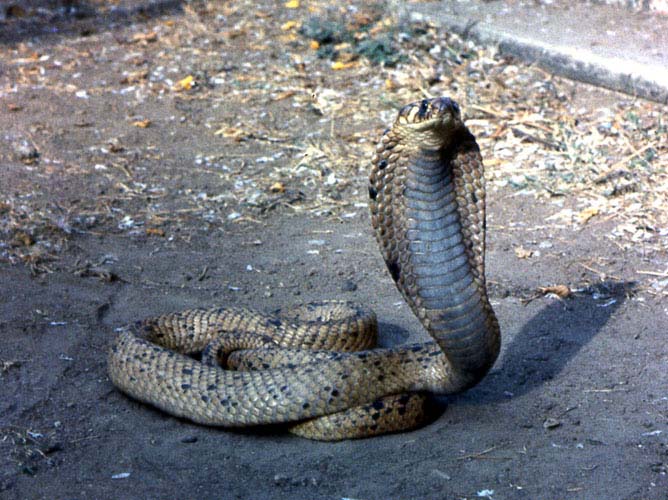
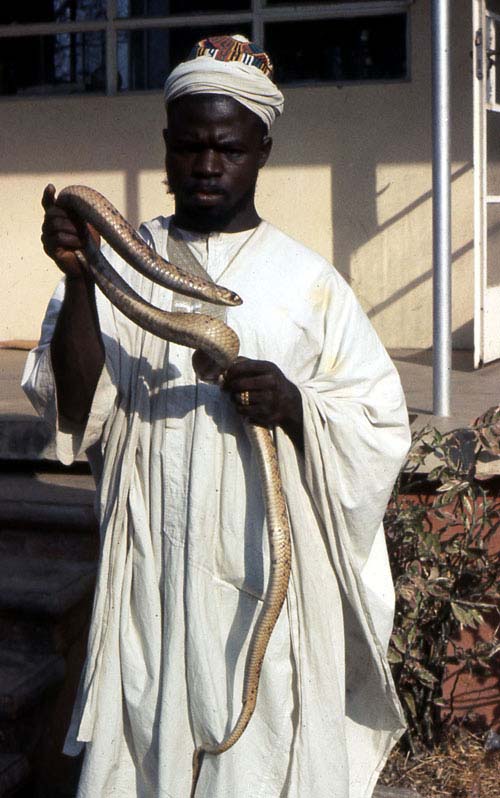
Egyptian cobra (Naja haje). Brought to Ibadan from northern Nigeria by a Hausa snake 'charmer'. Precise area of origin unknown. February 1965.
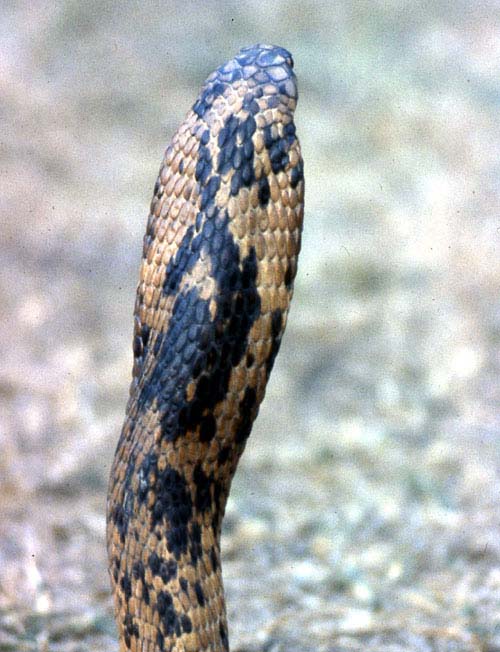
Rear view of head and hood of Egyptian cobra (Naja haje). Brought to Ibadan from northern Nigeria by a Hausa snake 'charmer'. Precise area of origin unknown. February 1965.
It was interesting that this Egyptian cobra did not bite its handler. Closer inspection revealed that the snake's fangs had been removed. February 1965.
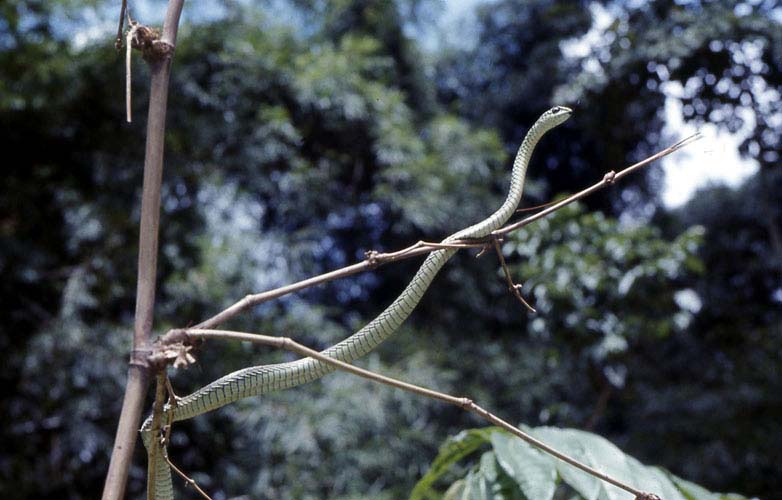
Twig snake (Thelotornis kirtlandi). This is a back-fanged snake. Ibadan, May 1967.
Twig snake (Thelotornis kirtlandi). This is a back-fanged snake. Ibadan, May 1967.
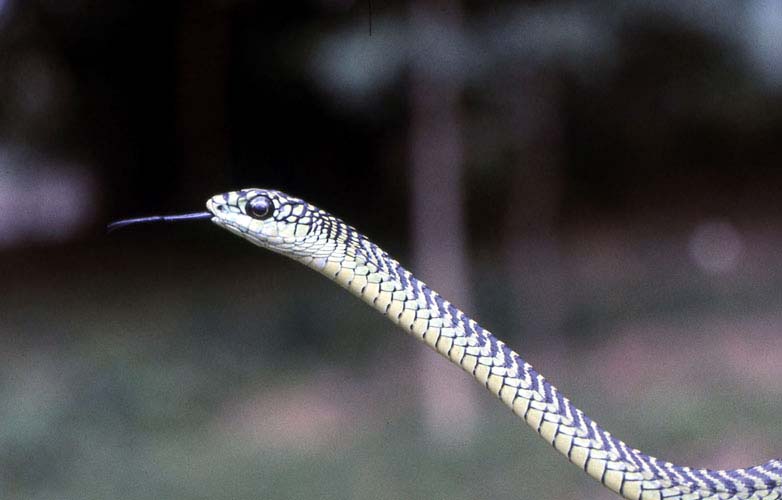
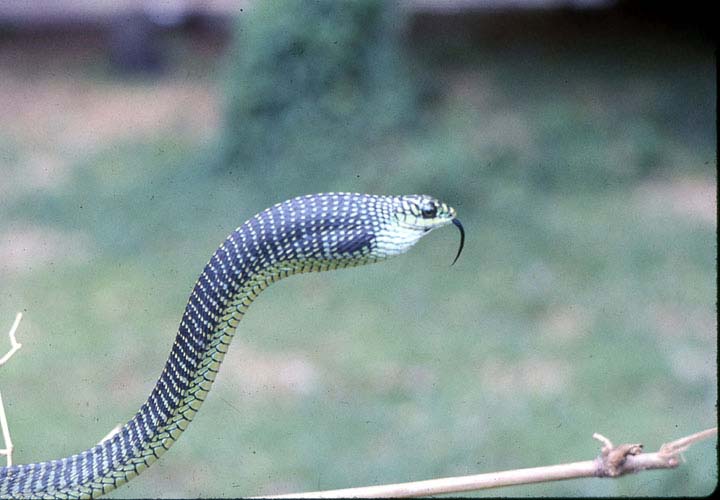
Head and tongue of twig snake (Thelotornis kirtlandi). The snake is said to flicker its black and red tongue in order to attract prey such as lizards. The primary function of a snake's forked tongue is to collect minute chemical particles from the air. When the tongue is withdrawn back into the mouth, each of the two 'prongs' comes into contact with a patch of sensory cells on the roof of the mouth called the Jacobson's organ. Sensory messages are then sent to the brain. Ibadan, May 1967.
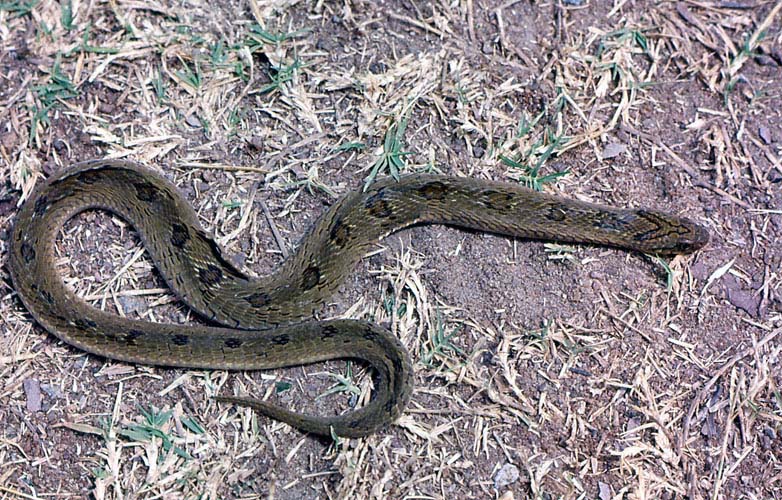
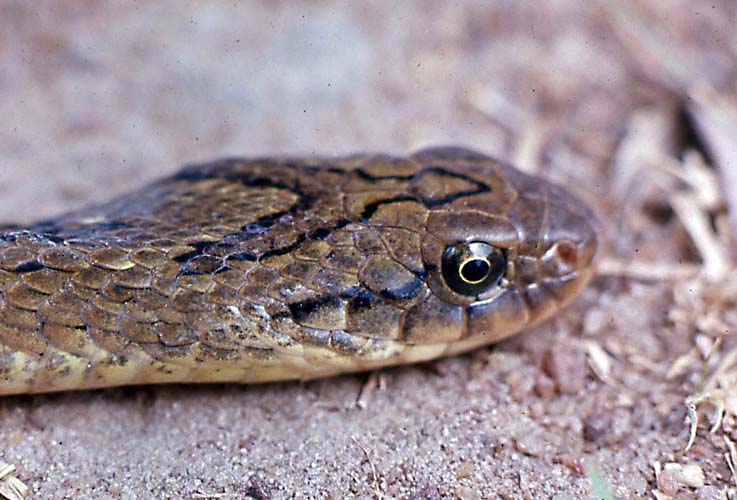
African beauty snake (Psammophis sibilans). Ibadan, January 1965. This is a back-fanged species.
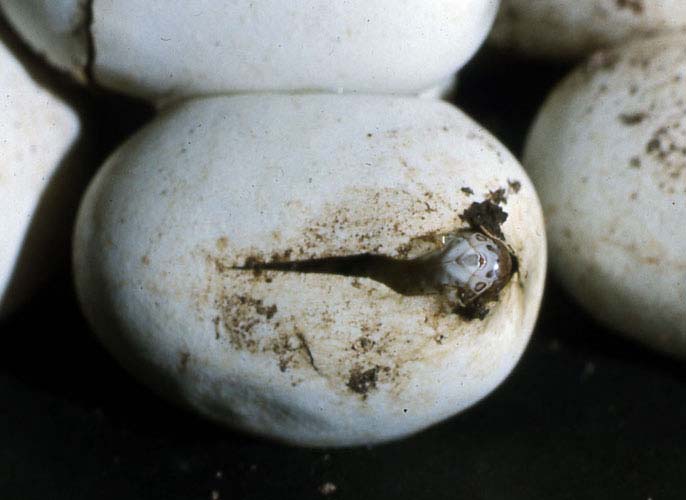
Egg of African beauty snake (Psammophis sibilans) hatching. Ibadan, March 1968. This was one of a clutch of eggs. Note that the young snake's egg tooth first slits the soft shell before the snake emerges.
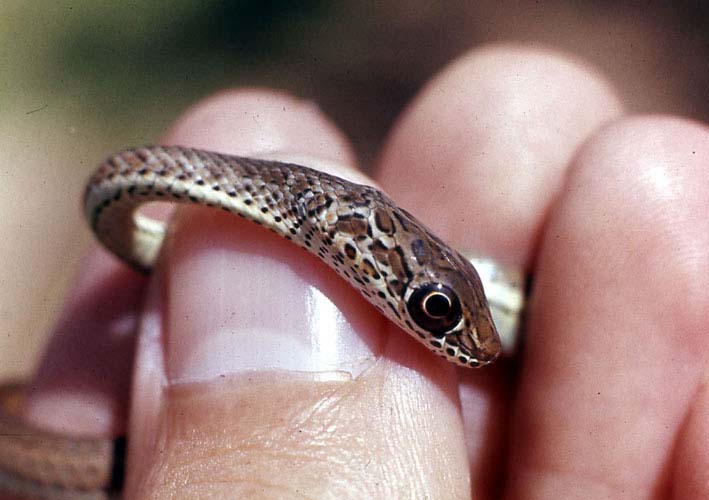
Very young African beauty snake (Psammophis sibilans). Ibadan, May 1964.
Boomslang (Dispholidus typus). Bafut area of Cameroon, May 1966. This is another back-fanged species.
Closer view of Boomslang (Dispholidus typus). Bafut area of Cameroon, May 1966.
Showing boomslang (Dispholidus typus) inflating the throat when threatened. Bafut area of Cameroon, May 1966.
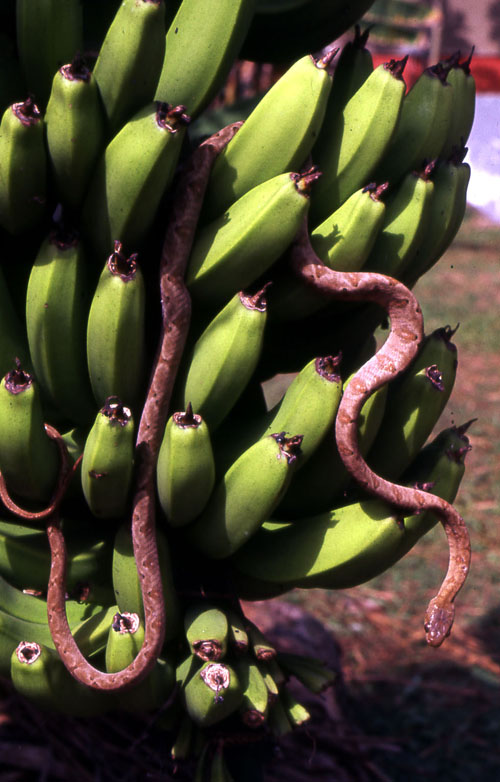
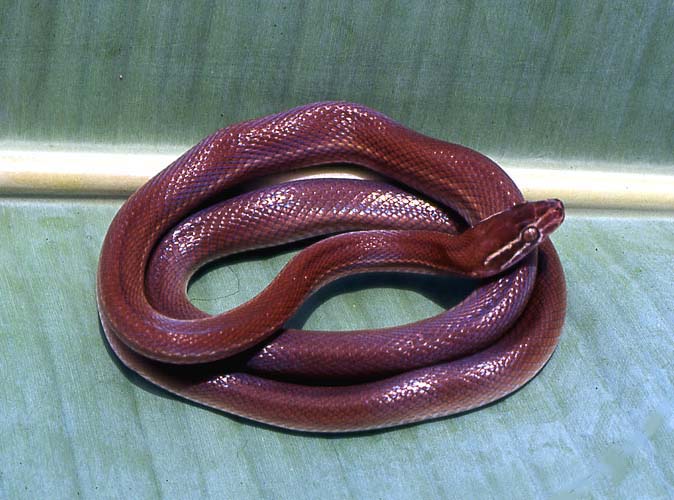
This back-fanged snake (Boiga pulverulenta) appears to have no common name. Ibadan, November 1964.
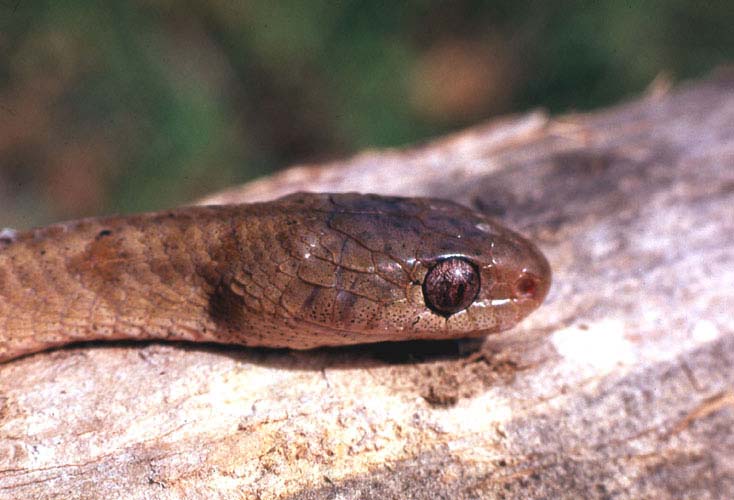
Head of Boiga pulverulenta. Ibadan, November 1964.
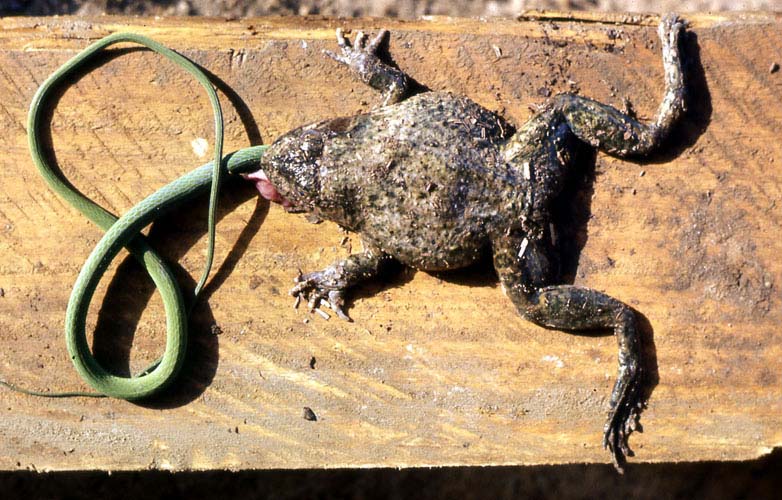
Unidentified frog (dead) having apparently attempted to swallow an emerald snake (also dead). The frog presumably died from internal injuries caused by the violent movements of the snake. The snake, Gastropyxis smaragdina, is non-venomous and presumably died from asphyxiation. Ibadan, July 1965.
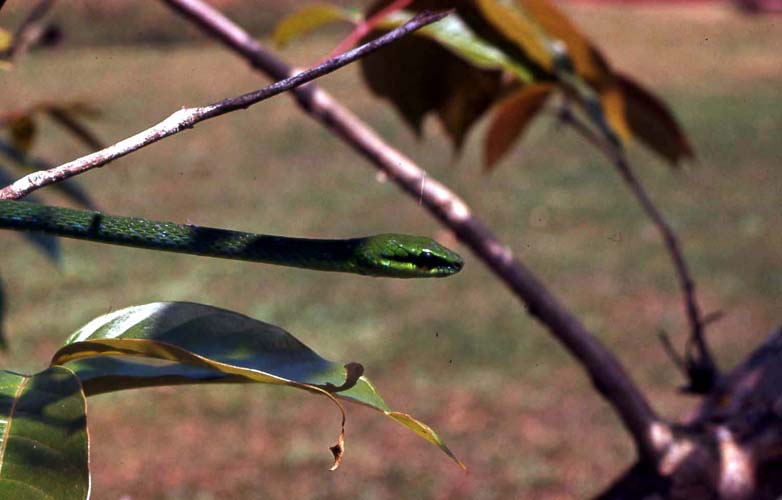
Emerald snake (Gastropyxis smaragdina). Ibadan, November 1964. A non-venomous species.
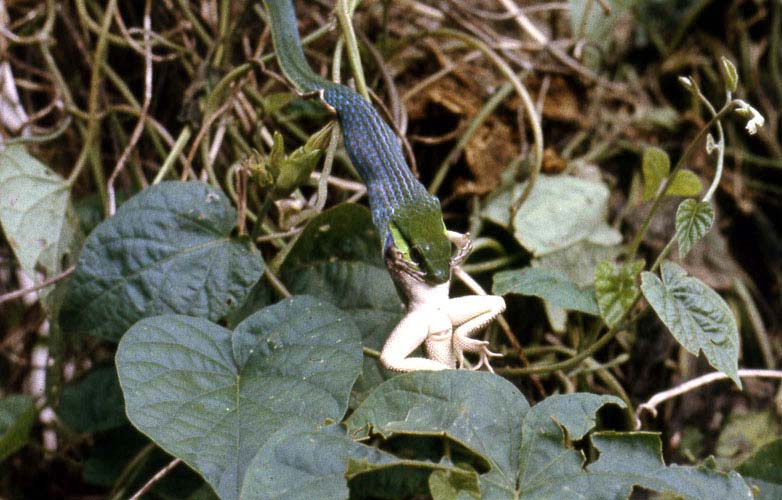
Emerald snake (Gastropyxis smaragdina) eating an agama lizard. Ibadan, July 1965.
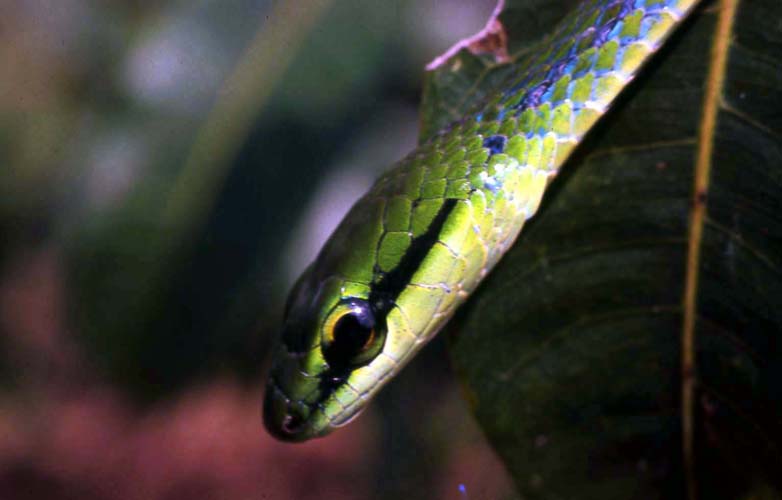
Head of emerald snake (Gastropyxis smaragdina). Ibadan, November 1964.
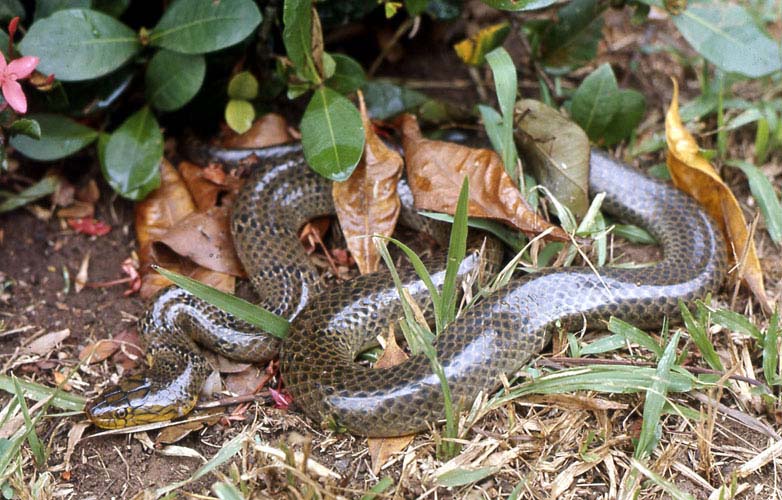
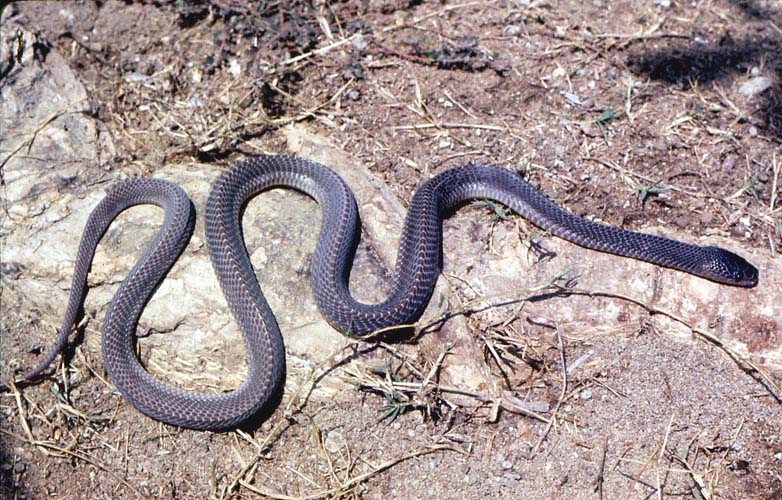
Smyth's water snake (Grayia smythii). Ibadan, January 1968. A non-venomous species.
Head of Smyth's water snake (Grayia smythii). Ibadan, January 1968.
Eggs of Smyth's water snake (Grayia smythii). Ibadan, February 1970.
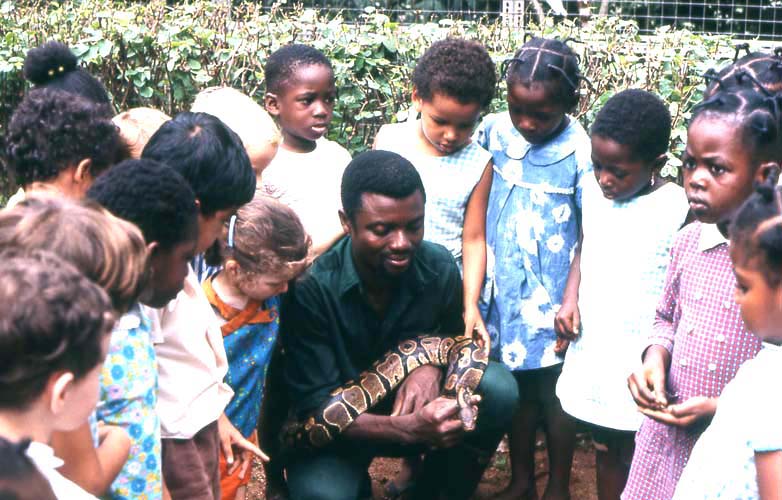
We encouraged school parties to the Zoo by giving talks and allowing the children to get close to the animals. Here keeper Nicholas Eze is showing the children a royal python.
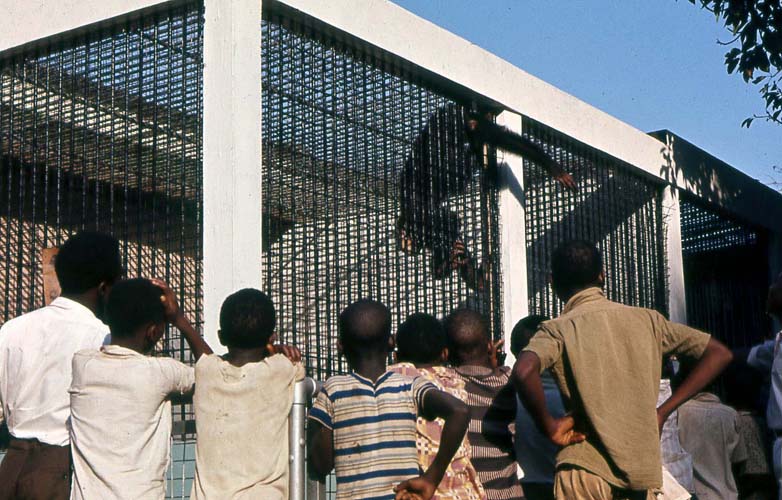
These zoo visitors are absolutely fascinated as they watch chamaeleons using their long tongues to catch grasshoppers.
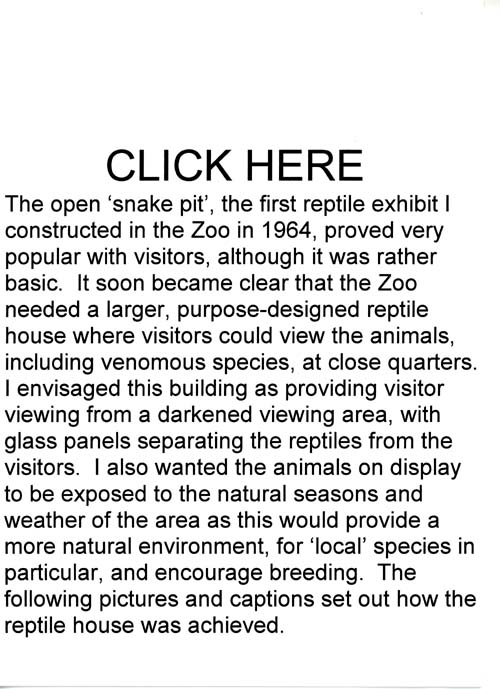
As a first attempt to show reptiles to visitors more effectively and attractively, I built a circular, walled anclosure in 1964 where several species of snake could be kept together and viewed safely from across the top of the wall. This exhibit was a big success with visitors.
Zoo visitor with royal python (Python regius). July 1969.
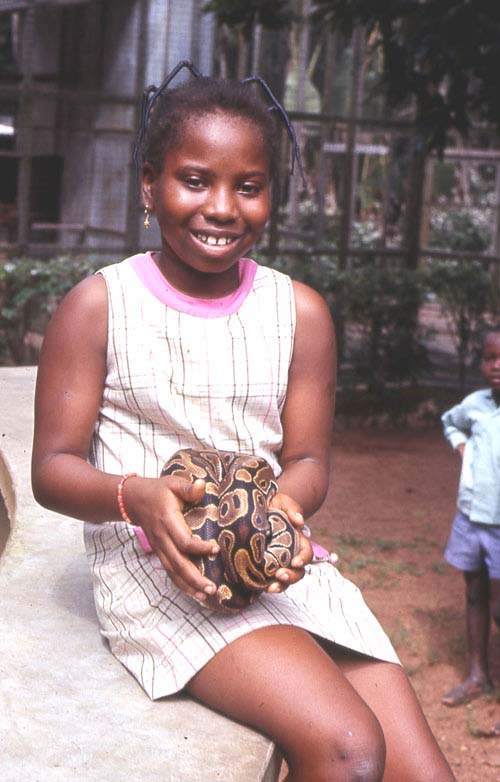
Another visitor handles a royal python. It was noticeable over the years how many regular visitors to the Zoo lost their fear of snakes and asked us to let them handle one. The royal python as a species was ideal for this purpose.
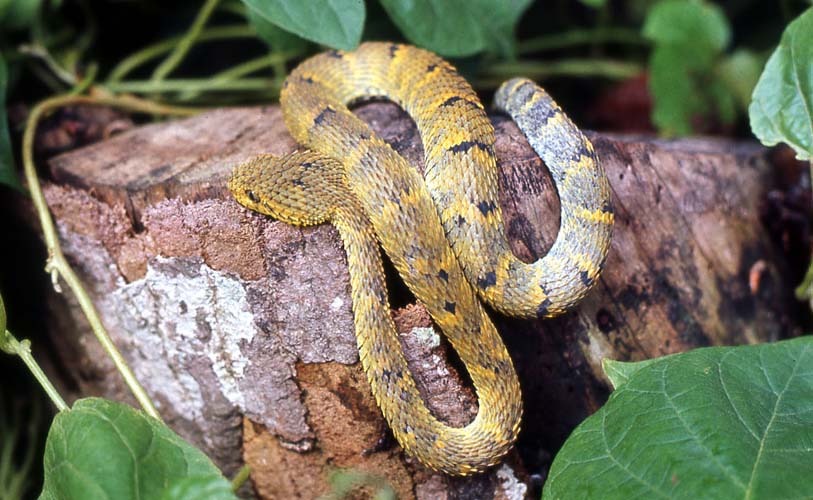
Green tree viper (Atheris sp.). Bafut, Cameroon, February 1965.
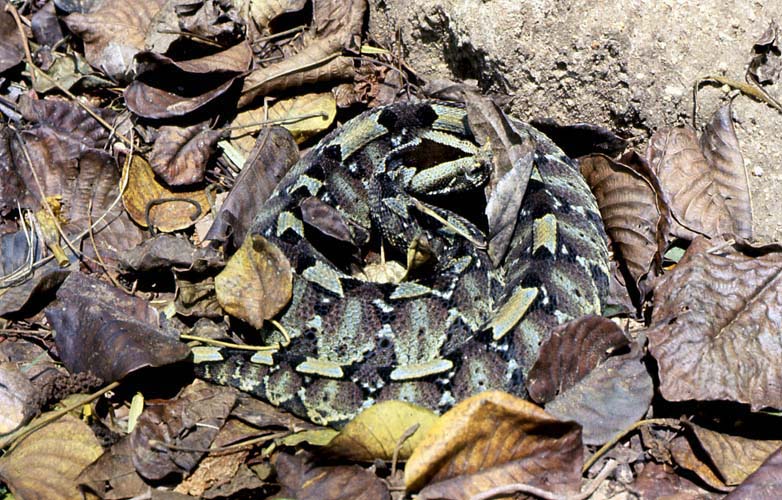
Rhinoceros viper (Bitis nasicornis). This viper is well camouflaged when resting on leaves and other vegetation. Bafut, Cameroon, March 1965.
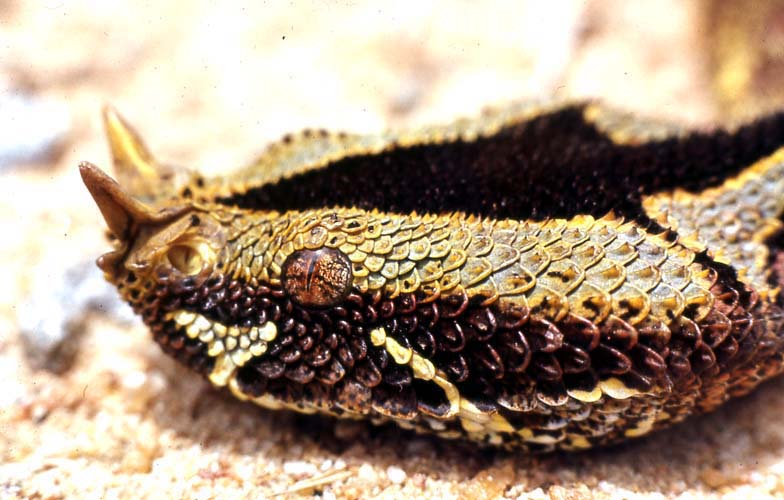
Head of rhinoceros viper (Bitis nasicornis). The 'horns' on the snout are enlarged scales. 1965.
Burrowing viper (Atractaspis sp.). These small vipers live mainly underground and feed on small mammals and lizards. Bafut, Cameroon, March 1965.
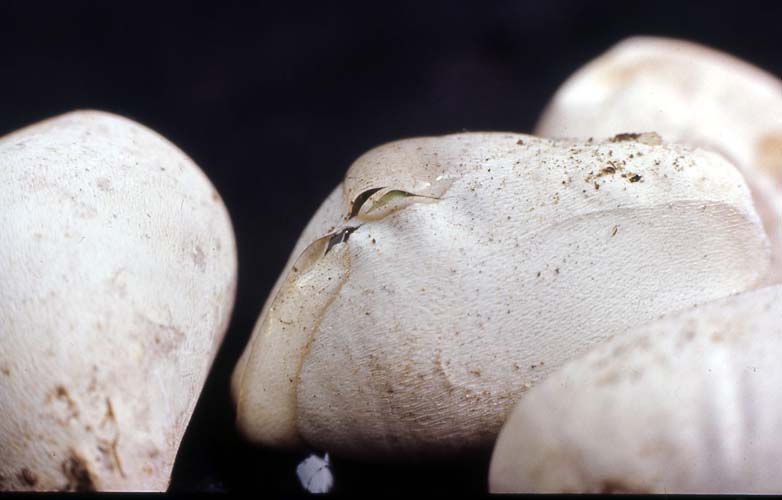
1. This and the four following images are of eggs of an emerald snake (Gastropyxis smaragdina) hatching. Ibadan, March 1967. Here the first few slits can be seen in the egg shell; these are made by the young snake using an egg tooth at the front of its mouth.
2. The front of the head of the hatchling is just visible. Snakes lay eggs that have leathery shells and which often adhere to each other to form a clump.
4. The entire head is now visible. Usually all the snakes within the same egg clump hatch at around the same time.
5. Slowly the young snake emerges. This is a non-venomous species.
3. Another view. Each egg is just under 30mm long. Once free of the egg shell and membranes, the young snakes move away and soon start to feed.
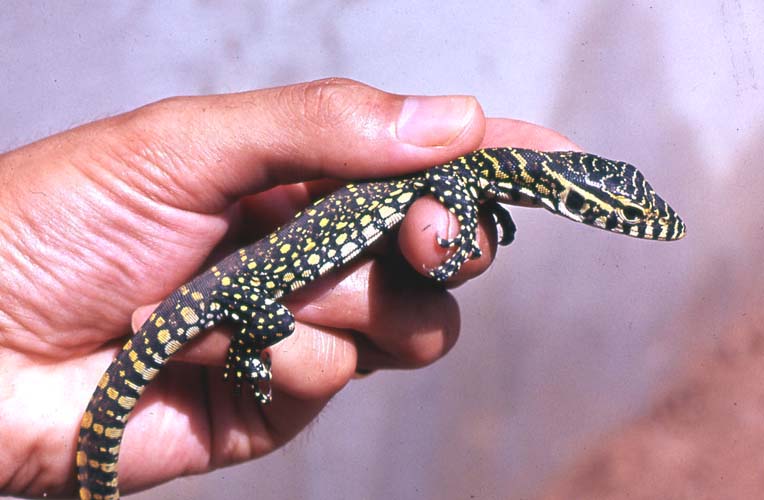
Young Nile monitor (Varanus niloticus). Ibadan area, May 1964.
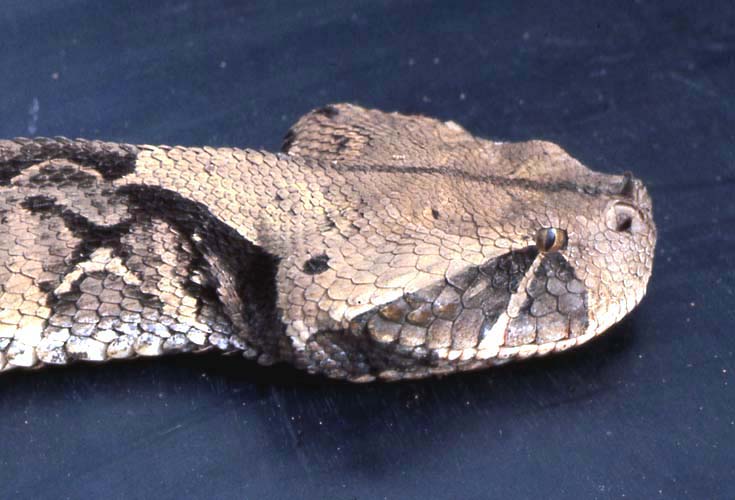
Gaboon viper (Bitis gabonica). Ibadan area, April 1965.
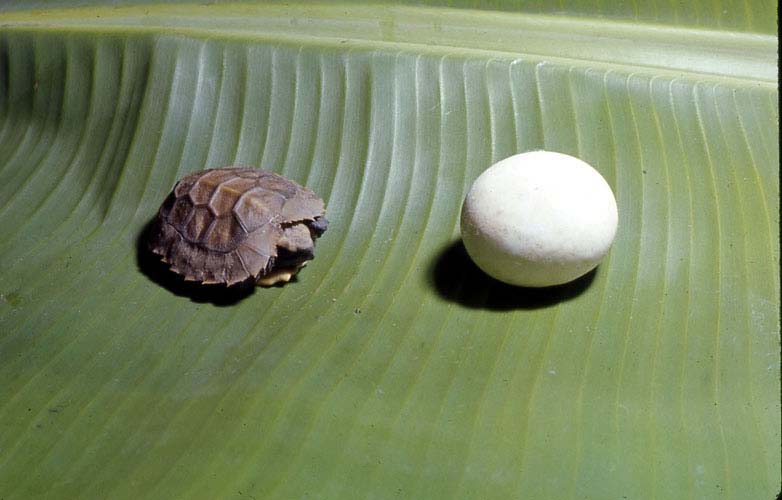
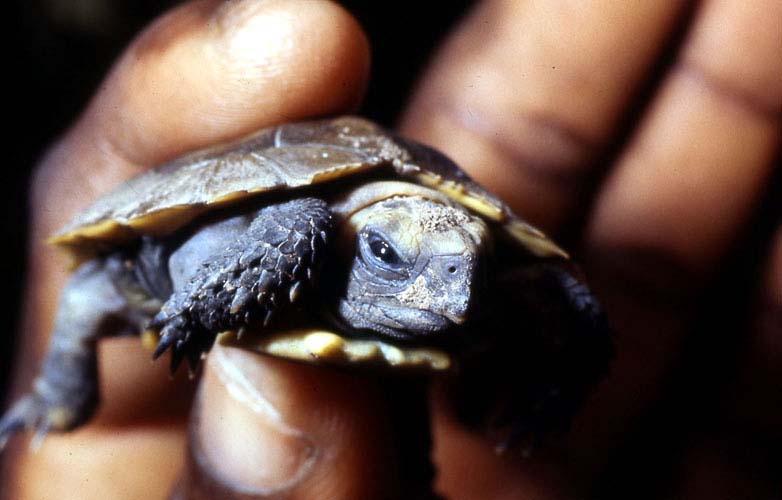
Newly hatched forest hinged tortoise (Kinixys homeana) with unhatched egg. Southern Nigeria, 3 May 1967.
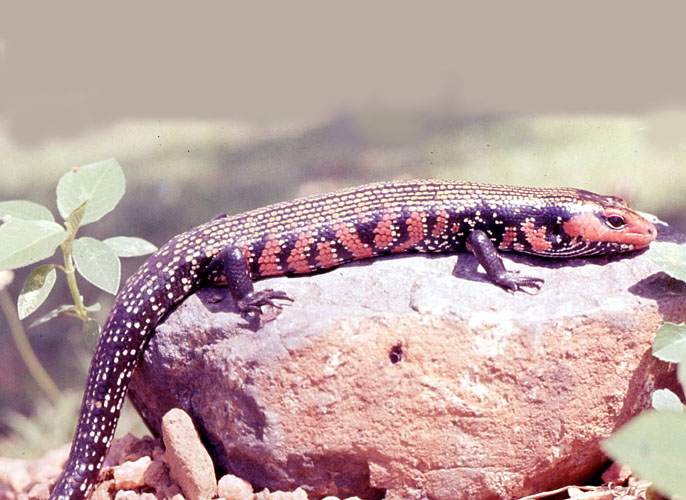
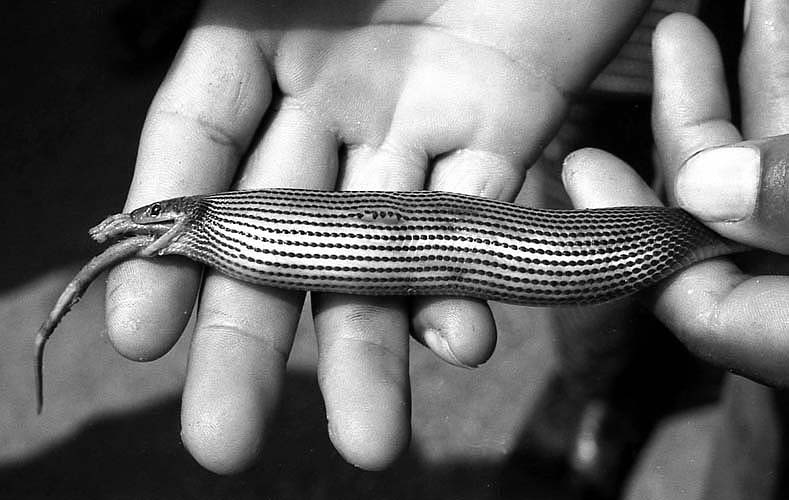
Fernand's or fire skink (Lepidothyris (Riopa) fernandi). Bafut, Cameroon, 1965.
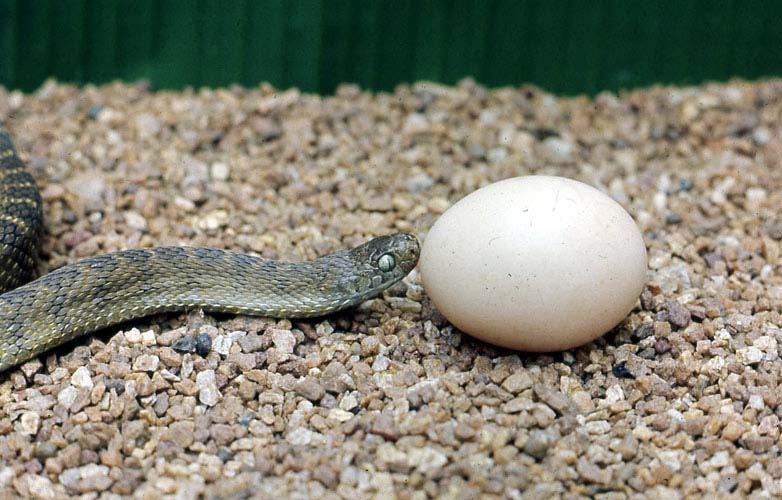
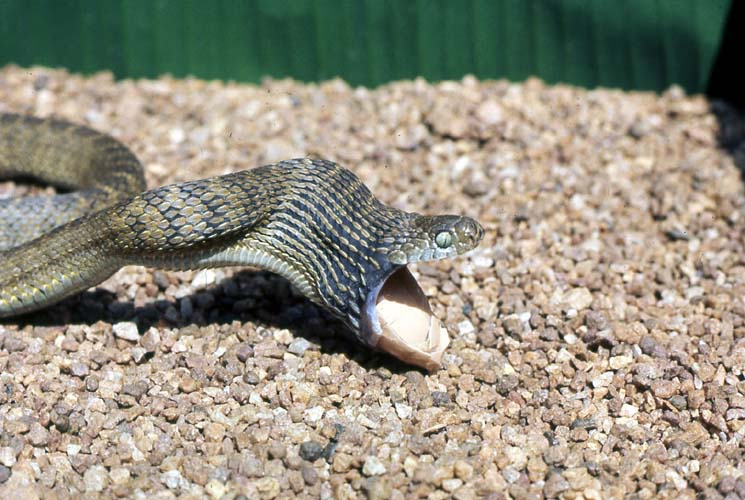
1. This and the following eight photographs show the entire process of an egg eating snake (Dasypeltis scabra) eating an egg at the Zoological Garden, University of Ibadan, 1966. Here the snake is examining a hen's egg placed in its vivarium.
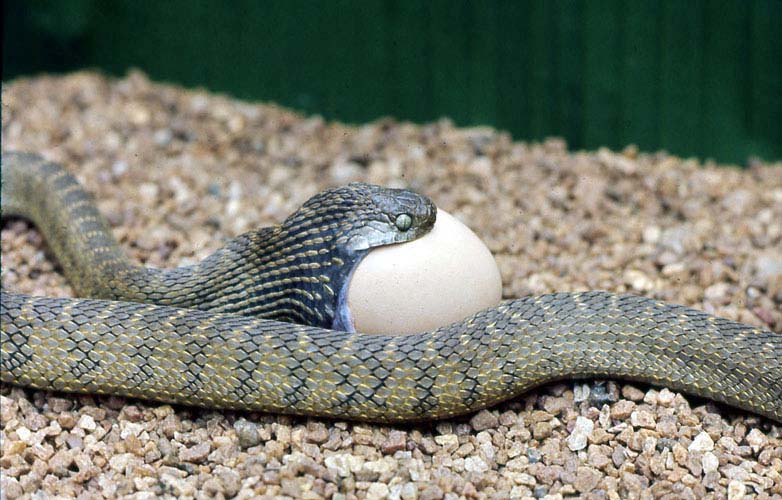
2. The snake opens its jaws to engulf the egg.
3. The movements of the lower jaw and then the body muscles draw the egg back into the gullet.
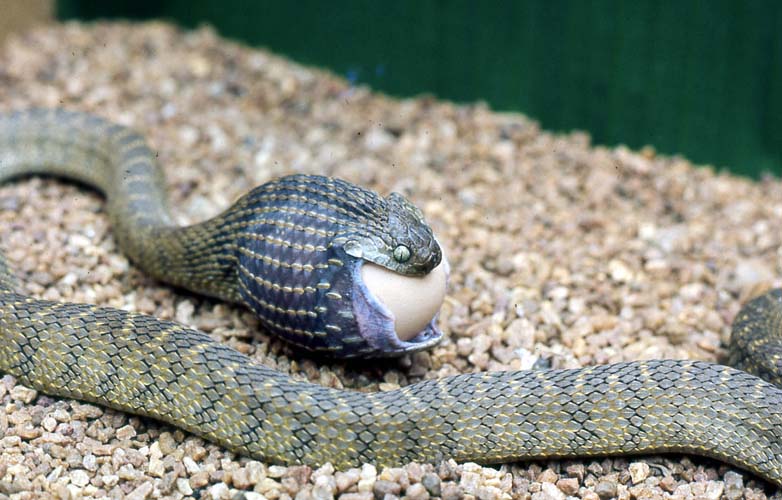
4. The teeth of the egg eating are greatly reduced. In the gullet area a number of bony projections from the vertebrae pierce the egg shell, aided by the snake squeezing and constricting the egg using the powerful muscles in its body wall.
5. As the snake constricts the gullet area, the egg shell collapses and the egg contents are awallowed.
6. Under continued pressure, the egg shell folds and is compacted into a number of longitudinal sections.
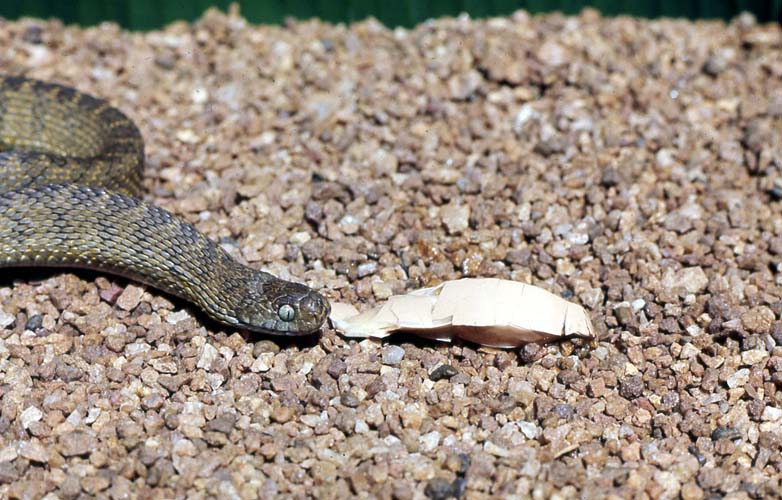
7. The snake prepares to eject the egg shell.
8. The shell starts to move forward and out.
9. Operation over! The snake will now find a quiet resting place where it can digest its meal...END OF EGG EATING SNAKE SEQUENCE.
It wasn't until the early 1970s that funds became available for a new reptile house. After consultations with the University's Chief Engineer and his colleagues, we agreed that we could kill two birds with one stone by partly demolishing the unwanted old zoo building above and reconstructing it to meet the special requirements of a reptile house.
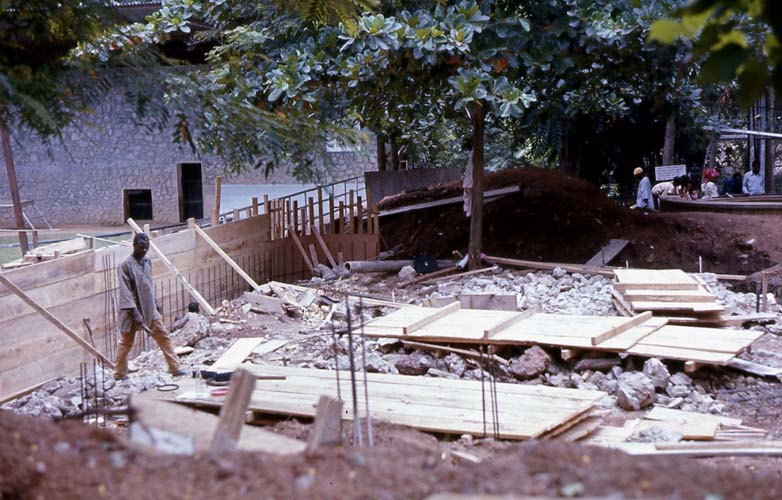
Demolition work commenced in 1974. The area shown above is where an open crocodile exhibit with pool was to be constructed, at one end of the main reptile building. We were careful to preserve as many shade-giving trees as possible. The new ape building can be seen in the background. June 1974.
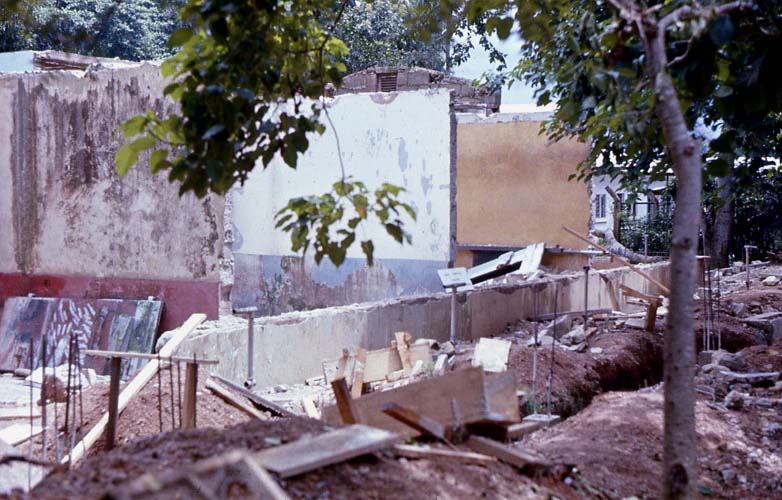
Some of the structures of the old building were to be retained and incorporated into the new development. An enclosed (though cool) public viewing corridor was to be constructed around the building, separated from the individual reptile exhibits in the central area by glass panels. June 1974.
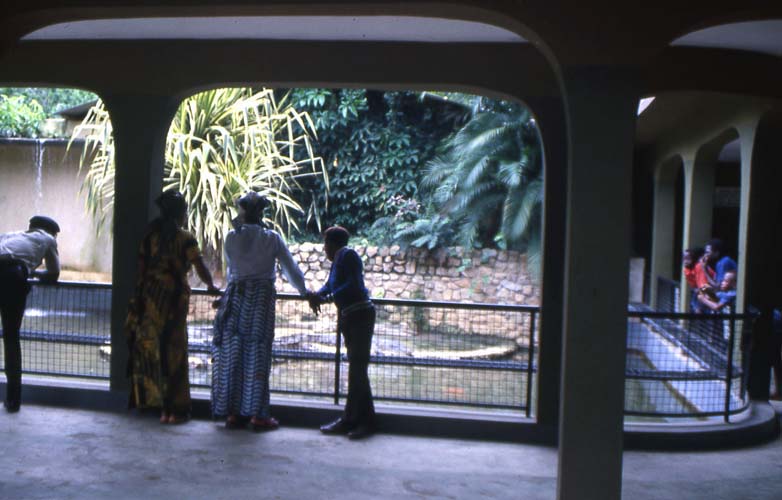
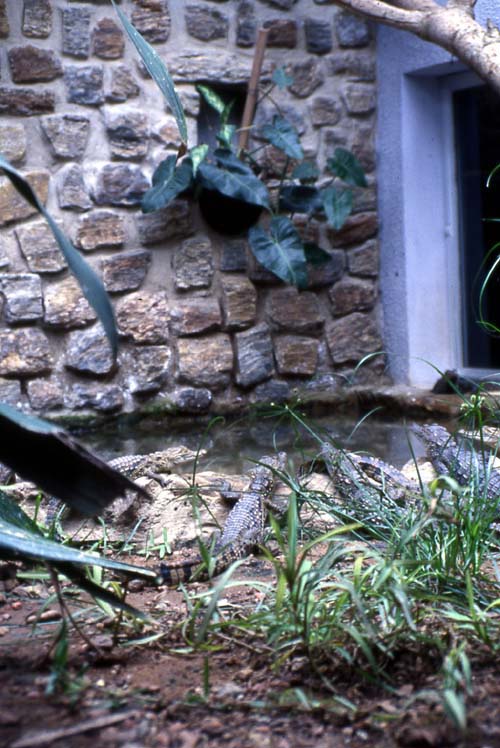
The new crocodile exhibit about a year after completion. The enclosure is open to the weather but the crocs have access to the pool or shade at all times. Visitore are provided with shelter from sun or rain by the covered walkway around the pool.
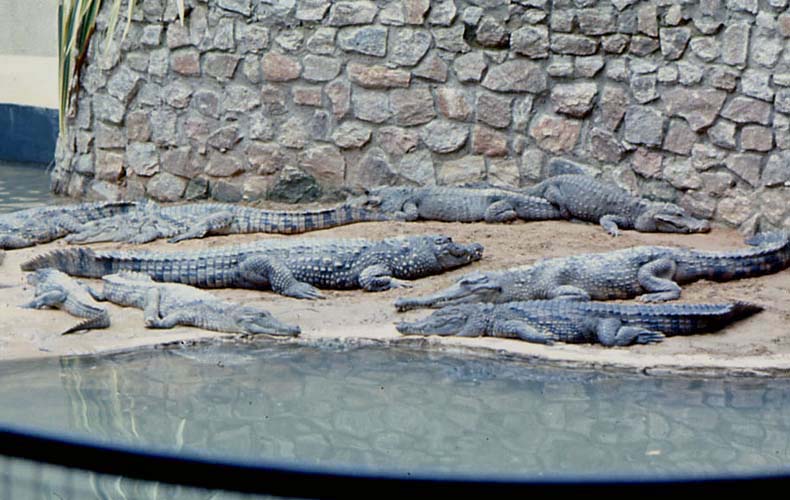
Mostly Nile crocodiles (Crocodylus niloticus) in their new enclosure. There is also a narrow-snouted crocodile (Crocodylus cataphractus), second back from the pool on the right. (THE REPTILE HOUSE STORY CONTINUES ON PAGE 4)
Unfortunately, I have few photographs taken inside the new reptile house but, as in this picture, all display units were exposed to the weather by providing part-meshed tops.
Natural light made it easy to grow plants within the display units, each of which was viewed through glass by visitors in the viewing area on the other side.
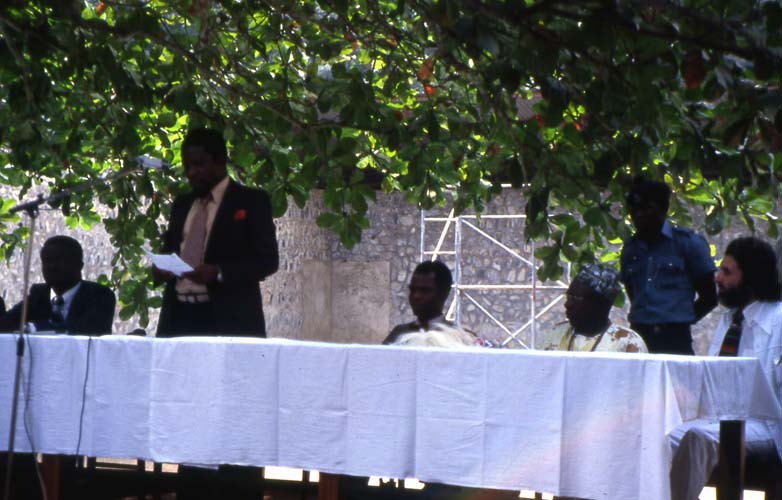
We allowed the building with its new occupants to settle down for some time, then we decided that the reptile house should have an official opening. This took place on 30 January 1978. Above is the head table where the main speakers at the ceremony were seated.
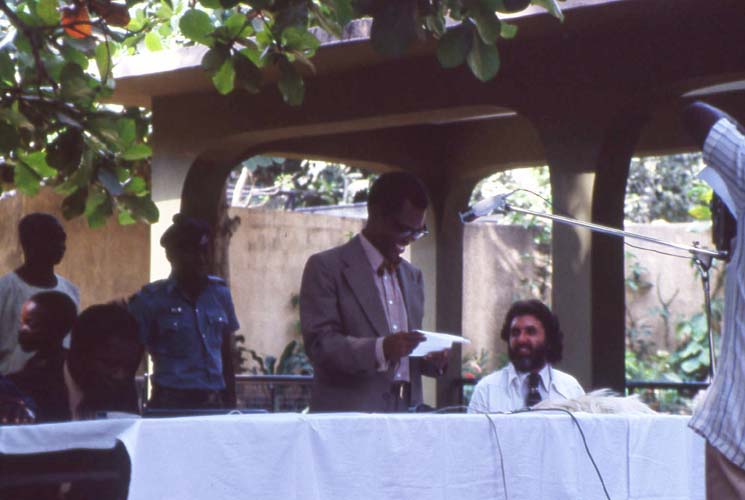
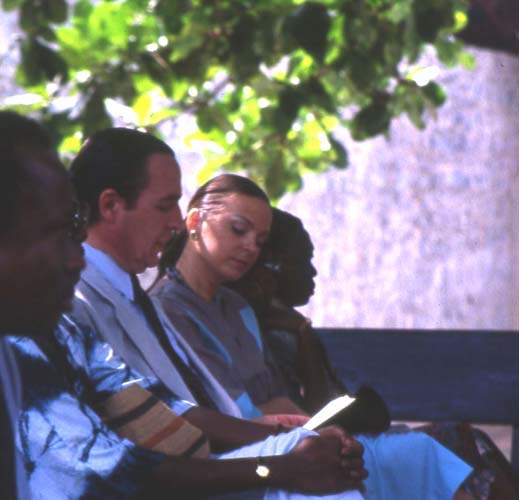
Attending the ceremony were the University's Vice Chancellor (speaking here), the Dean of Science and many other members of the academic and administrative staff. A very notable and welcome guest was the Orangun of Ila, a prominent Yoruba Chief, who was accompanied by a Police guard.
Also attending were the British Deputy High Commissioner to Nigeria and his wife.
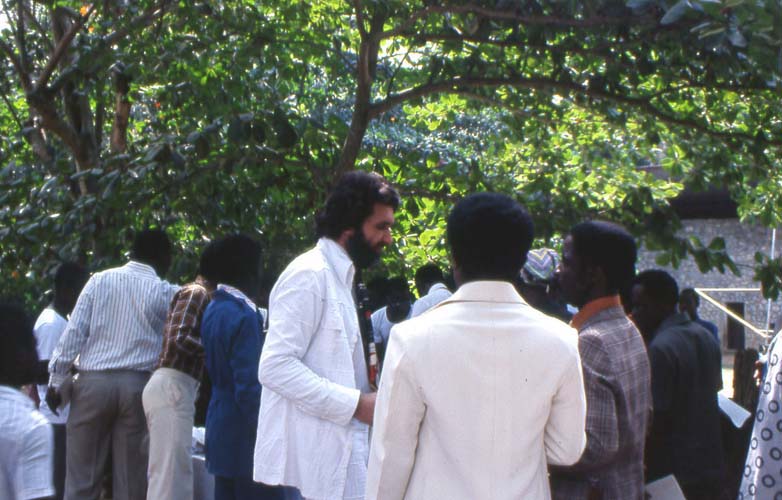
After the speeches and the cutting of the tape by the Orangun of Ila to pronounce the reptile house officially open, we all headed to the refreshments table for a beer and a chat. The new reptile house proved very popular with the visiting public. By 1979 the Zoo was receiving nearly a quarter of a million paying visitors each year, more than any other public attraction of any kind in Nigeria.
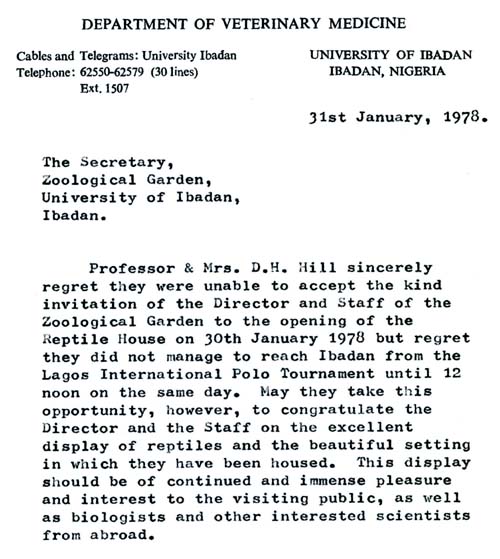
Professor Desmond Hill, the Head of the Department of Veterinary Medicine, and his wife, were unable to attend the ceremony for an unforseen reason. However, he sent me the above note. (THIS IS THE END OF THE SEQUENCE ABOUT THE NEW REPTILE HOUSE)
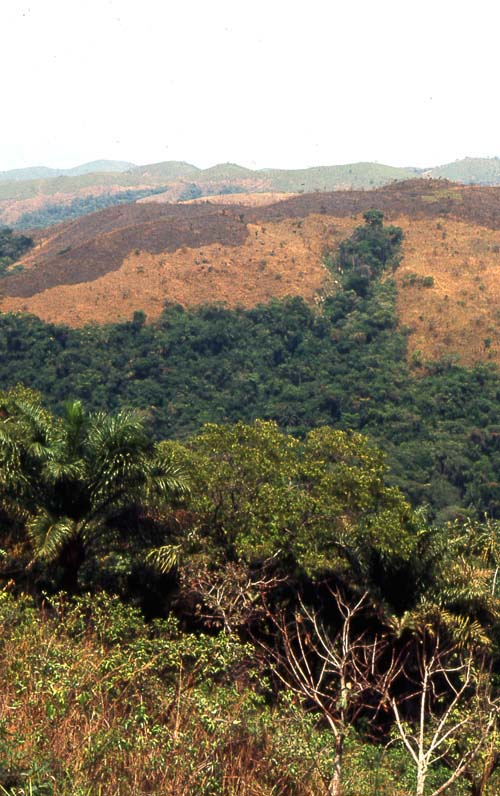
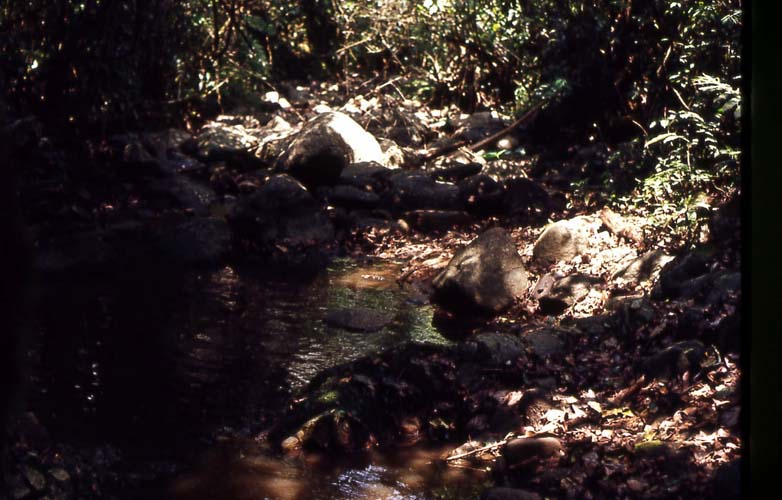
We are now in Cameroon, specifically the Bafut area of the Bamenda Highlands. The trees in the foreground obscure a deep, narrow valley at the bottom of which runs a clear, cool stream. March 1965.
The stream and its banks at the bottom of the valley, running through areas of deep shade, provide the perfect habitat for the astonishing hairy frog (Trichobatrachus robustus). March 1965.
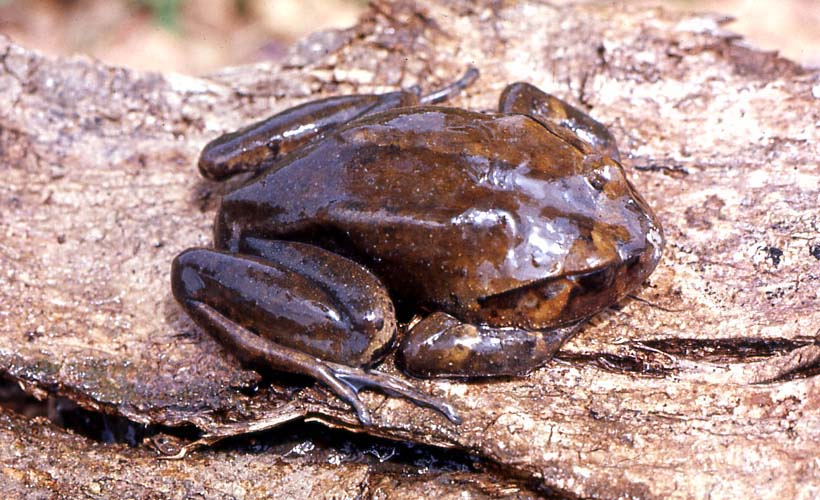
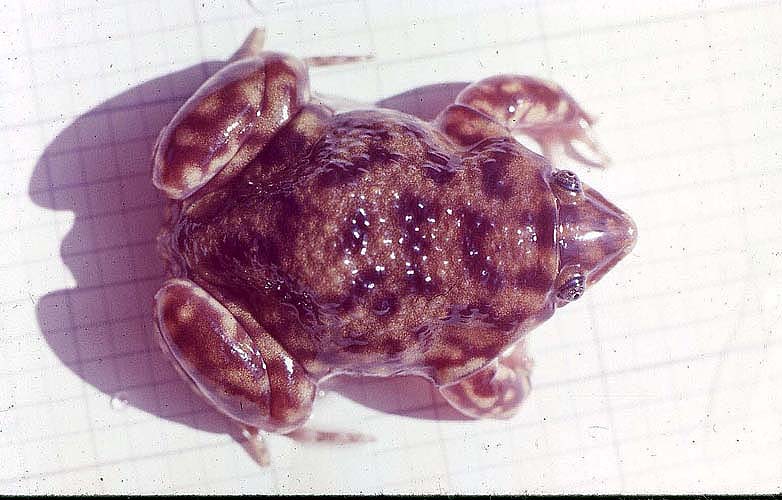
Hairy frog (Trichobatrachus robustus), almost certainly a female. I had formal, written permission from the relevant Cameroon Government Department to collect a small number of these frogs and take them back overland to the University of Ibadan in Nigeria. February 1965.
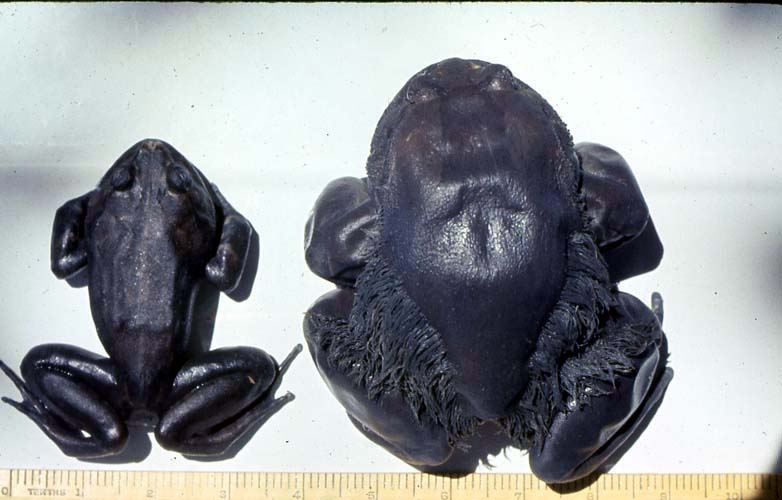
I had learned from previous trips to Cameroon that hairy frogs, once removed from their cool natural habitat, do not travel well and seem intolerant of the higher temperatures in the lowland forest areas. The above specimens are preserved. The smaller female is on the left. Note the 'hairs' on the flanks and thighs of the male. March 1965.
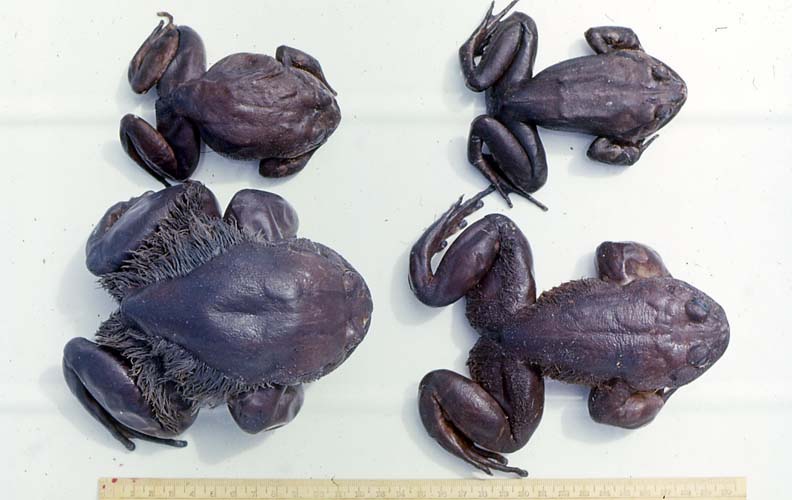
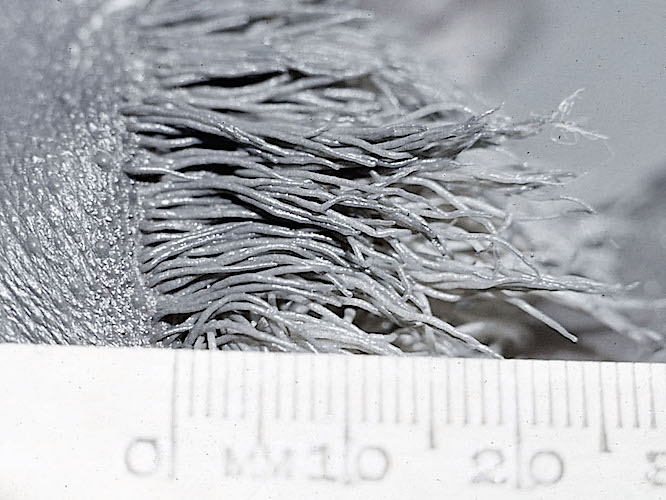
The 'hairs' which give this frog its name can be seen in the male on the lower left. They are only found in breeding males and are actually outgrowths of skin called dermal papillae which are packed with blood vessels. They are thought to increase the capacity of the males to absorb oxygen when they spend extensive periods in the water with the eggs after they have been laid by the female. March 1965.
The dermal papillae can be seen particularly well in this male hairy frog. Apart from interest in this frog from researchers in the Department of Zoology at the University of Ibadan, I had been asked by an American researcher to try to obtain specimens, so it didn't matter so much that some of the frogs reached Ibadan in a preserved state. March 1965.
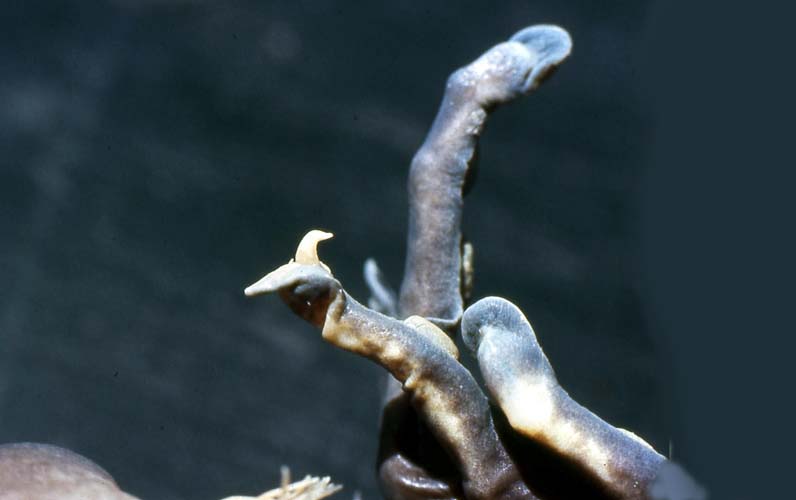
This is the back foot of a hairy frog. As a defence mechanism, a threatened or struggling hairy frog actually breaks its toe bones which then puncture and protrude through the toe pads as bony claws with which the animal defends itself. March 1965.
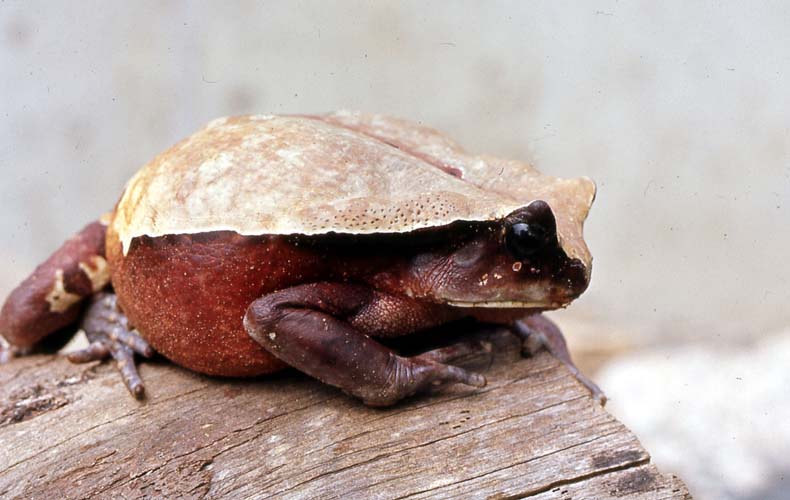
Another interesting amphibian in Cameroon was the African giant toad (Amietophrynus superciliaris). Again, I had formal permission to obtain a small number. This toad seemed reasonably common in the Bafut area and seemed to be found mainly within the farmed and forested areas. March 1965.
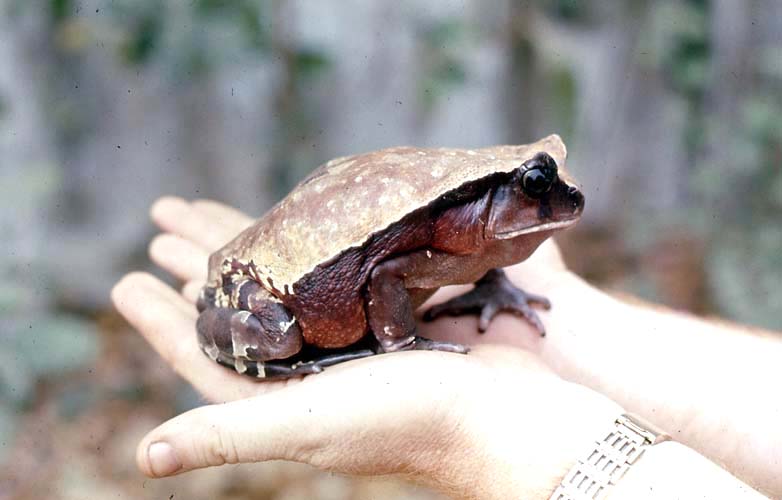
A shot to give some idea of size, although this specimen is not fully grown. This toad feeds on small rodents as well as a wide range of invertebrates. March 1965.
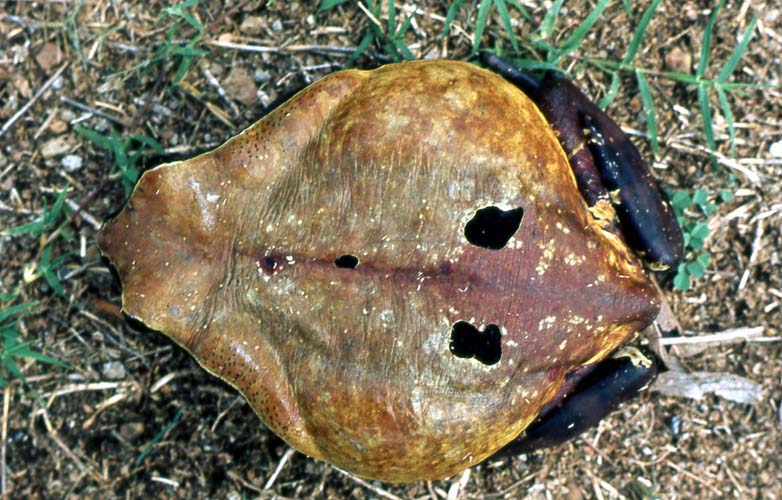
The shape, colours and markings of the African giant toad provide excellent camouflage, particularly when among fallen leaves. March 1965.
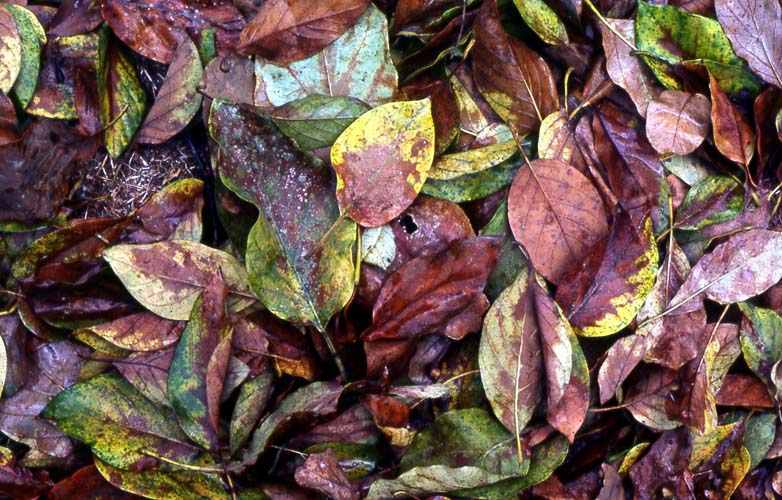
See if you can find it here...... March 1965.
Professor Robert Oldham, ex Department of Zoology, University of Ibadan, has kindly identified this frog as a mottled burrowing frog (Hemiscus marmoratus). It lays its eggs in a terrestrial burrow near water. The female sits with the eggs until they hatch and then makes a tunnel in the soil down which the tadpoles travel to the water. Ibadan, 16 March 1964.
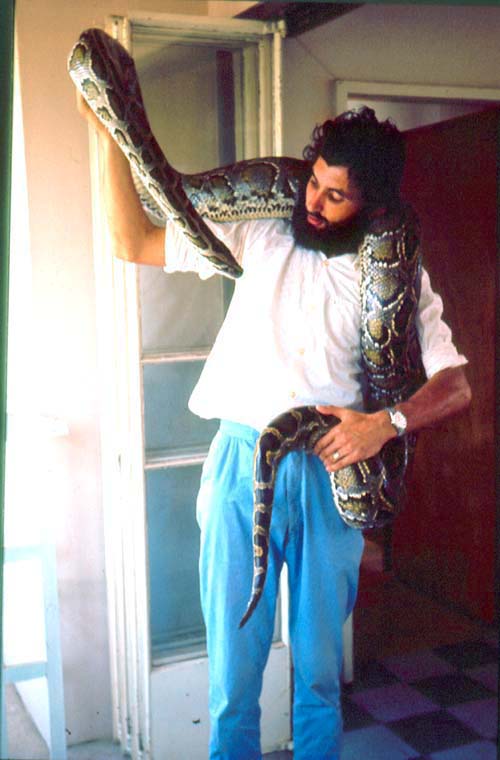
Burmese python (Python molurus bivittatus). March 1966.
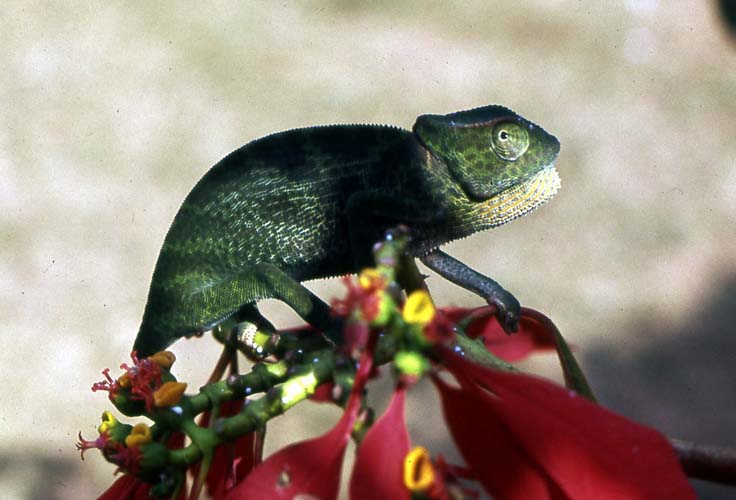
Graceful chamaeleon (Chamaeleo gracilis). Ibadan, January 1964.
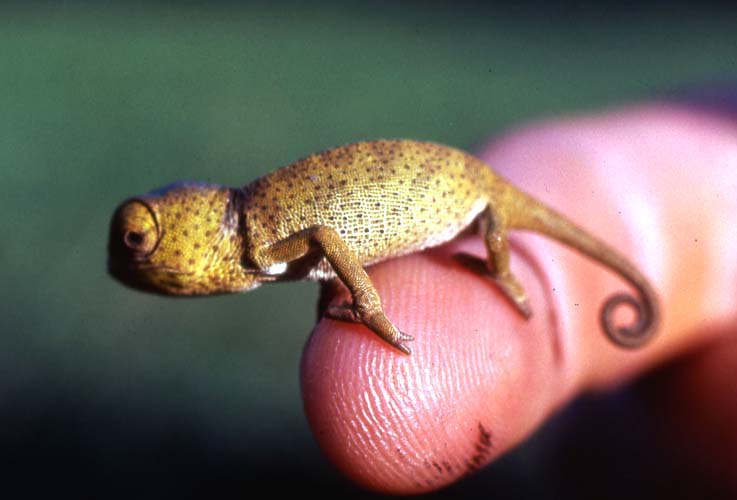
Young chamaeleon, possibly C. gracilis. Ibadan, January 1964.
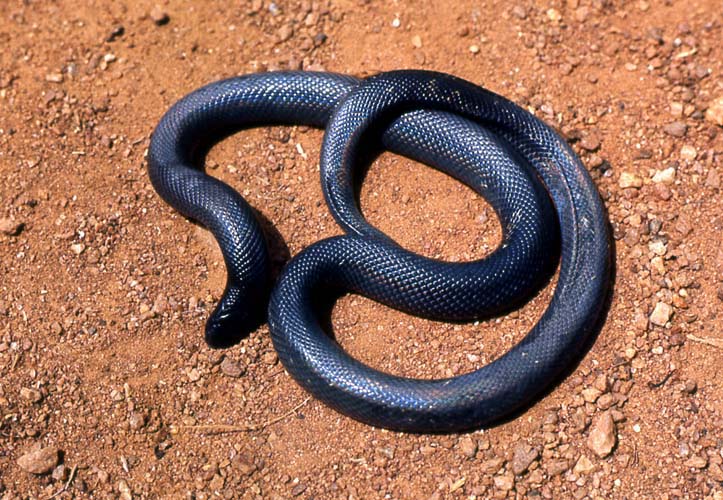
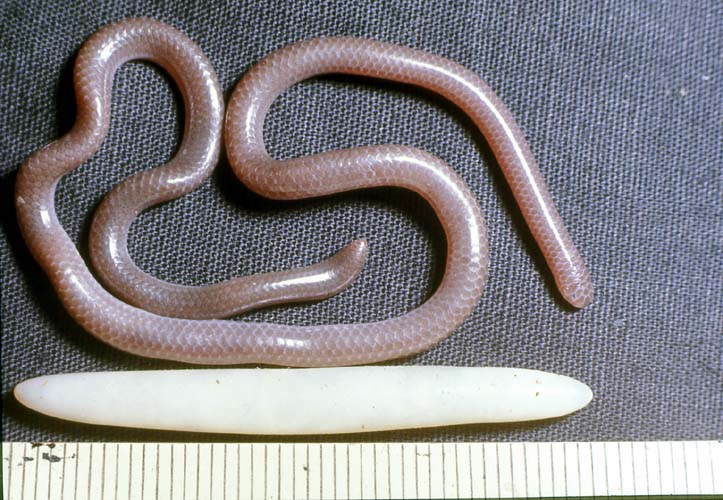
Worm snake (Leptotyphlops sp.). This snake was brought to me in Ibadan in 1974 and as far as I could ascertain had been taken in the Ibadan area. These snakes are rarely seen as they seldom come above ground, at least by day. The single egg was laid a few days after its arrival. See next photo....
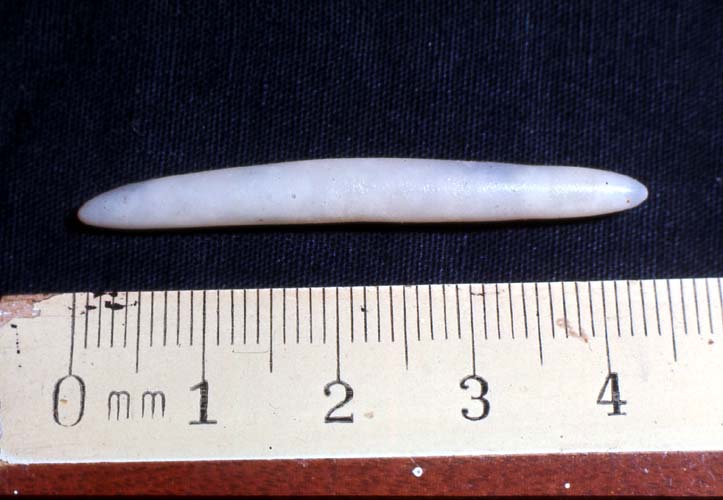
Showing the size of the Leptotyphlops egg in the previous photo. Ibadan area, 1974.
I am holding a black cobra (Naja melanoleuca) that was captured and killed on the University of Ibadan campus, 11 October 1972. It measured 8 ft. 4 in. in length and weighed 8 lb. 1 oz.
Closer view of the same black cobra. University of Ibadan campus, 11 October 1972.
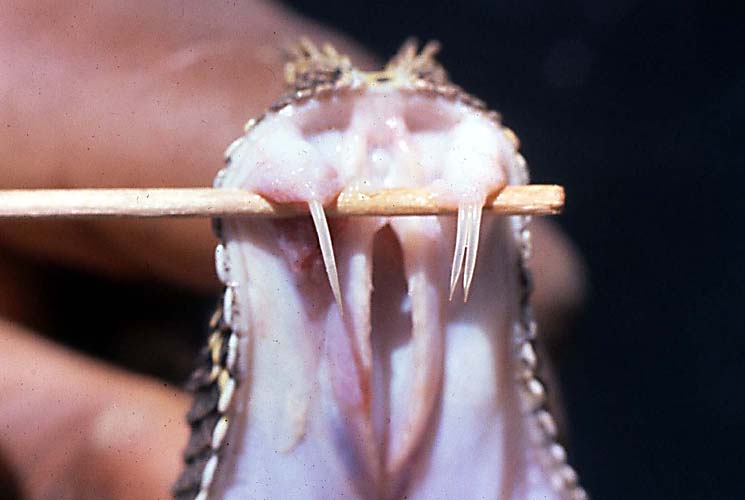
Showing the fangs of the black cobra. Note that the fangs in this group of venomous snakes are fixed, ie. they cannot hinge and fold back as they do in the vipers etc. University of Ibadan campus, 11 October 1972.
During the chase of this black cobra before it was killed, it regurgitated these bird eggs, the identity of which was uncertain. University of Ibadan campus, 11 October 1972.
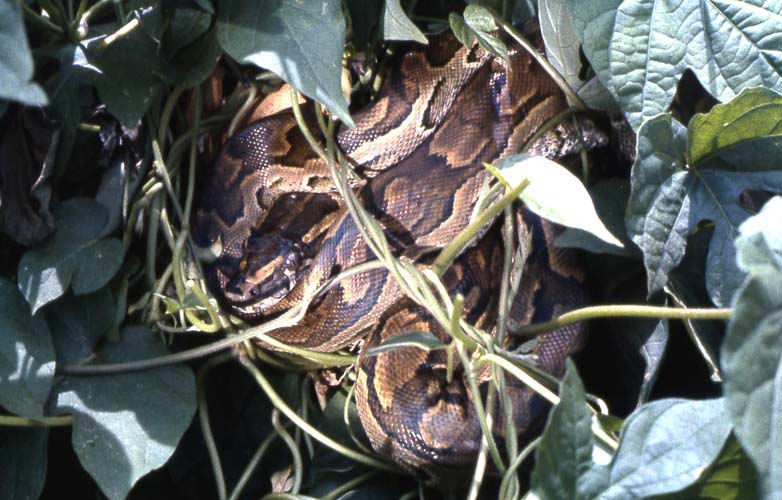
African python (Python sebae) in the open snake enclosure in the Zoological Garden, University of Ibadan. March 1965.
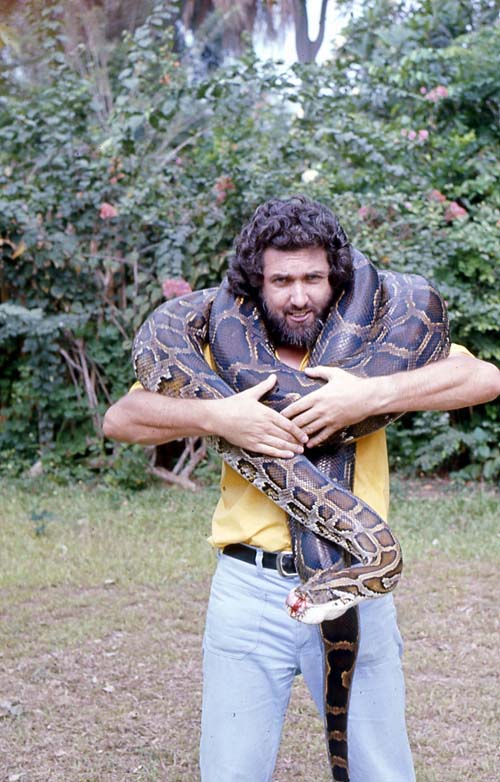
For me this is a tragic photograph - the last photo of my Burmese python which developed inoperable mouth cancer. It was euthanased later that day. I have its skeleton at my home in Bristol. Early 1975.
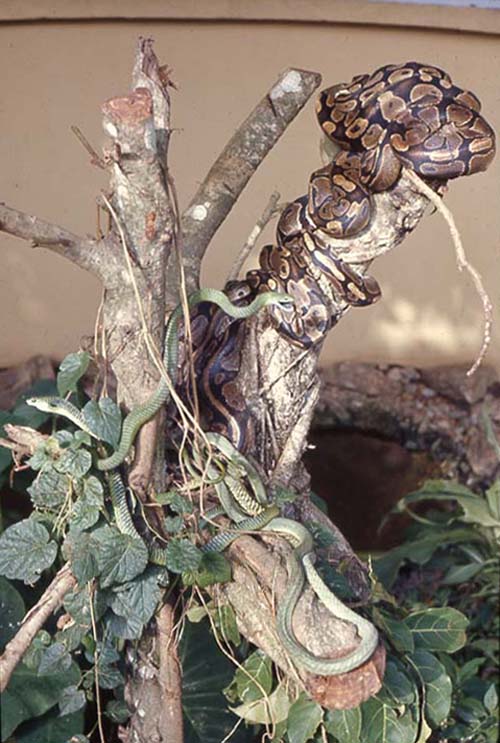
Royal pythons (Python regius) mating. Zoological Garden, 1977.
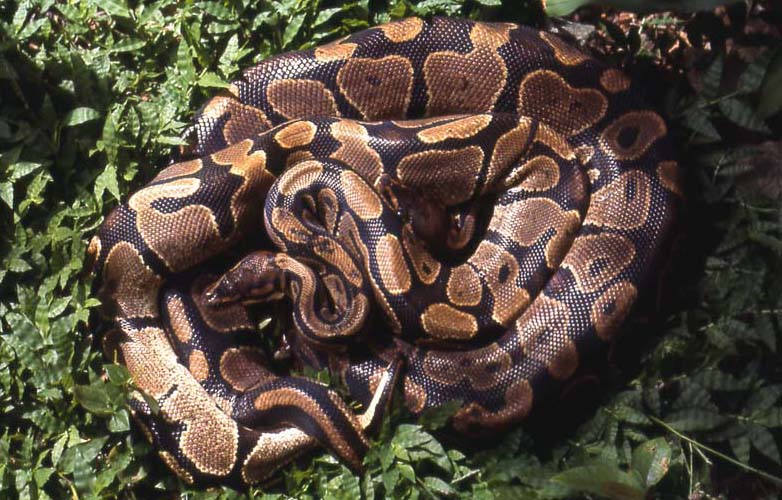
Royal python (Python regius) eggs. Zoological Garden, 13 March 1966.
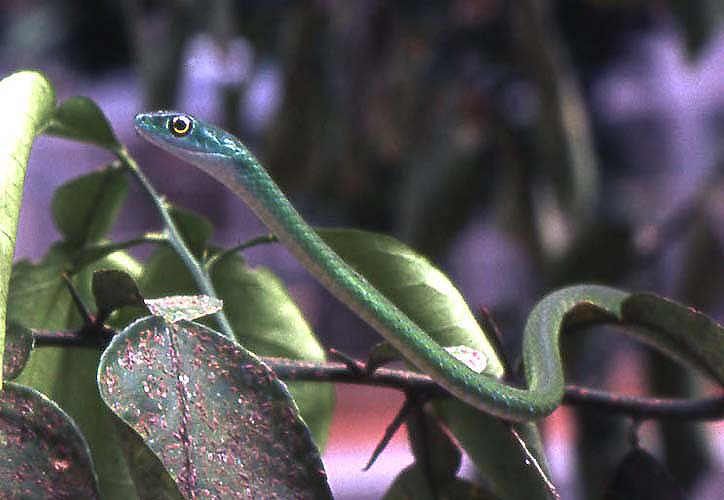
Green tree snake (Philothamnus irregularis). This non-venomous species feeds on frogs, lizards and perhaps fish. Ibadan, May 1964.
Juvenile green tree snake (Philothamnus irregularis). Ibadan, February 1965.
Green tree snake (Philothamnus irregularis) displaying when threatened. Ibadan, May 1964.
The black tree snake (Thrasops occidentalis) is non-venomous and is found in forested areas. By filling its lungs and air sacs with air, the snake here has inflated the front third of its body in response to the 'threat' from the photographer, thus making it appear thicker and larger than it normally is. Ibadan, October 1963.
The juvenile black tree snake (Thrasops occidentalis) has very different colours and markings from the adult - it probably reaches maturity when around two to three years old. This species feeds on a range of small vertebrates. Ibadan, 1 December 1964.
The harmless house snake (Boaedon virgatus) is often found in houses and other buildings. Ibadan, April 1964.
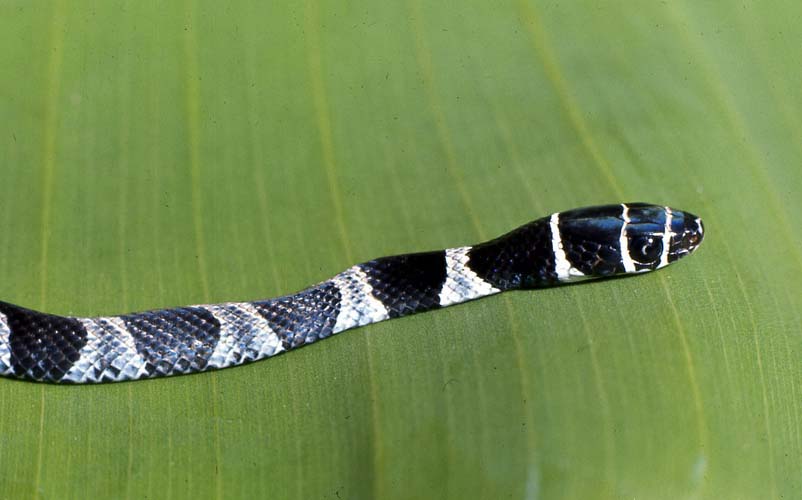
After corresponding internationally with several herpetologists, for whose input I am most grateful, this snake has been identified as Meizodon regularis, a back-fanged forest species. It has been stated, however, that the taxonomic separation of M. coronatus and regularis is not satisfactory. This specimen was found on the University of Ibadan campus, Nigeria, in May 1967; it is a young snake, hence the conspicuous markings with their strong colour contrasts.
The file snake (Mehelya poensis) is so named because of the distinctive shape, in cross section, that resembles a triangular file. This snake feeds on other snakes as well as lizards and frogs. Ibadan, 20 February 1965.
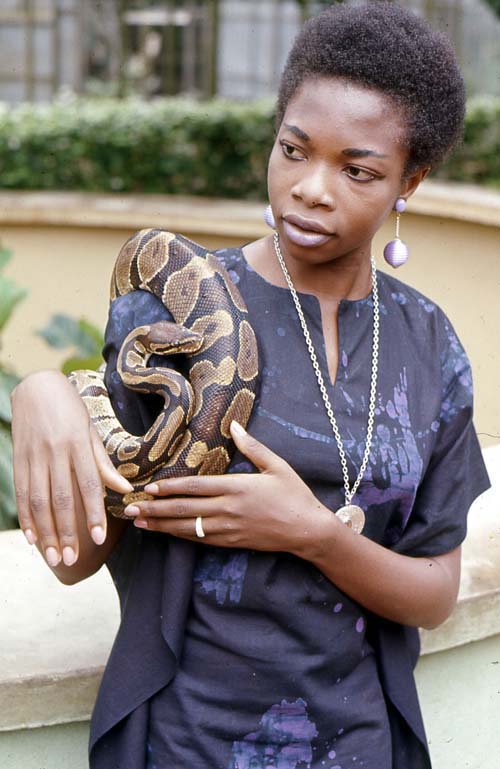
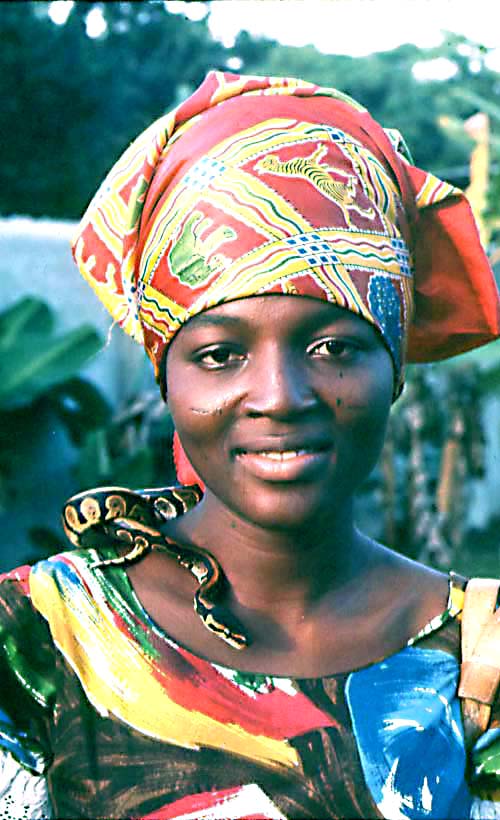
The small royal python around the neck of this visitor to the Zoo rather appropriately complements her head-dress. Zoological Garden, 1967.
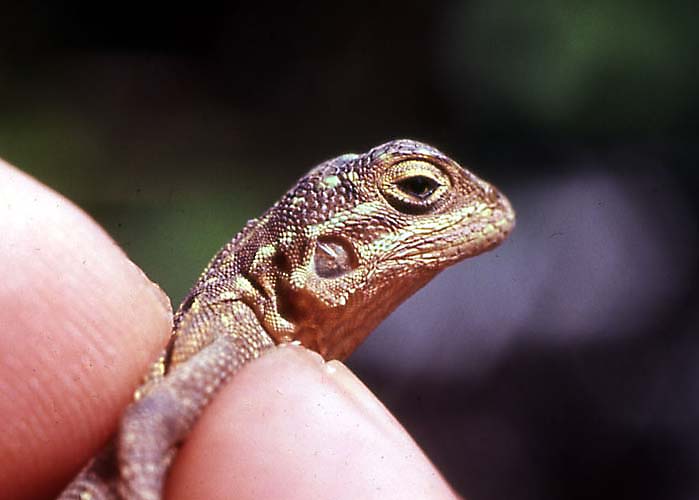
An immature agama lizard (Agama agama). This lizard is found over much of Nigeria, and particularly so around human habitations where it finds hiding places and food in the form of small invertebrates - some of the latter also attracted by human activities. Dominant males are part red and blue in colour. Although I have used the above scientific name, it seems that the taxonomy of the genus Agama is currently under review. Ibadan, May 1964.
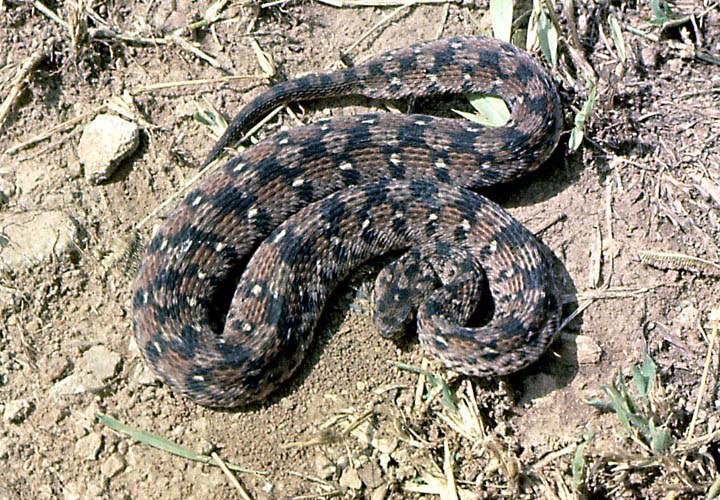
Night adder (Causus rhombeatus). This snake is relatively common in the Ibadan area. Most specimens I saw were somewhere between 1.5 and 2 feet in length. It seems to feed to a large extent on toads. Its venom is regarded as one of the least dangerous of the vipers. Ibadan, December 1964.
Head of night adder (Causus rhombeatus). Ibadan, December 1964.
The carpet viper (Echis carinatus) is another rather small viper, probably not exceeding 3 feet in length. It is found in drier areas north of the forest zone and its venomous bite is particularly dangerous. This snake has strongly keeled scales and is also known as the saw-scaled viper. This specimen was brought from northern Nigeria, but the precise location was unknown. 1965.
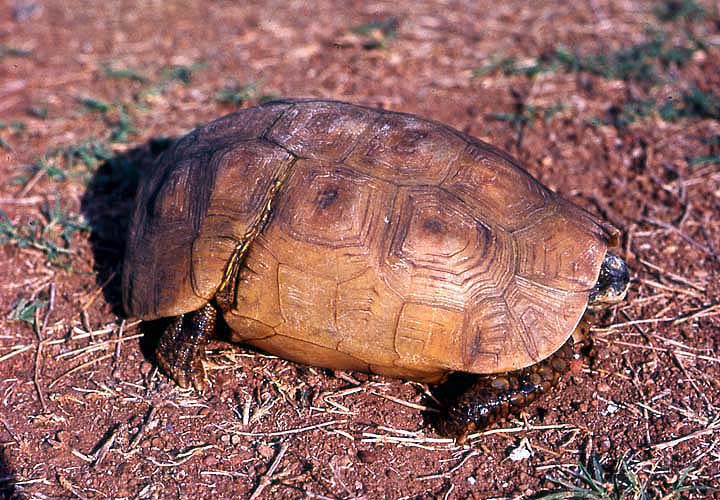
Hinged tortoise (Kinixys belliana). These tortoises are so called because of the hinged carapace which can close at the back to protect the back feet and rear end generally. In Nigeria this species seems to be distributed mainly in the drier areas to the north, while K. homeana is found further south. March 1964.
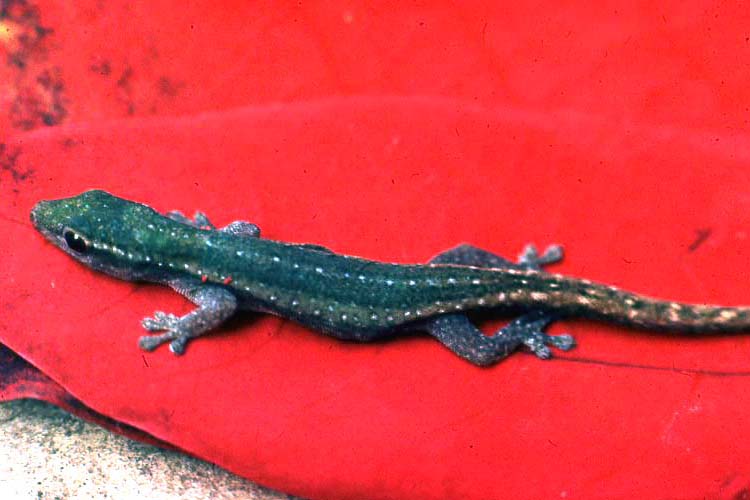
This is a Lygodactylus gecko, probably L. conraui. These geckos are diurnal and this specimen was 6cm in total length. Note what appear to be red-coloured mites on the back, above the front legs. Ibadan, November 1963.
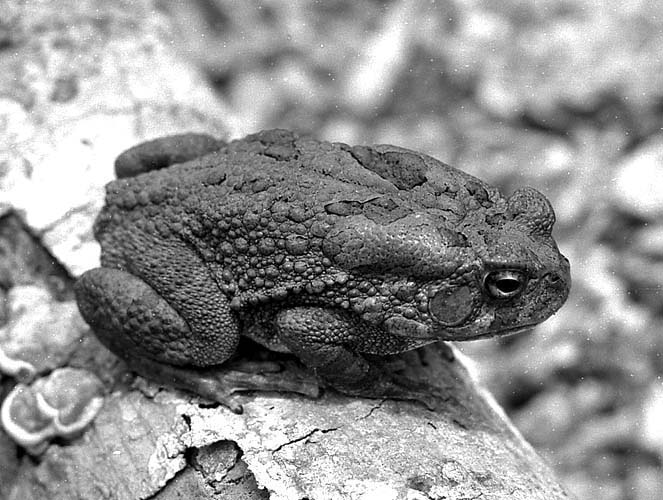
African toad (Bufo regularis). These toads seemed relatively common on the University of Ibadan campus and, particularly at the start of the rainy season around March or April, could be heard calling at night from water-filled ditches and ponds as they commenced breeding activity. Ibadan, May 1964.
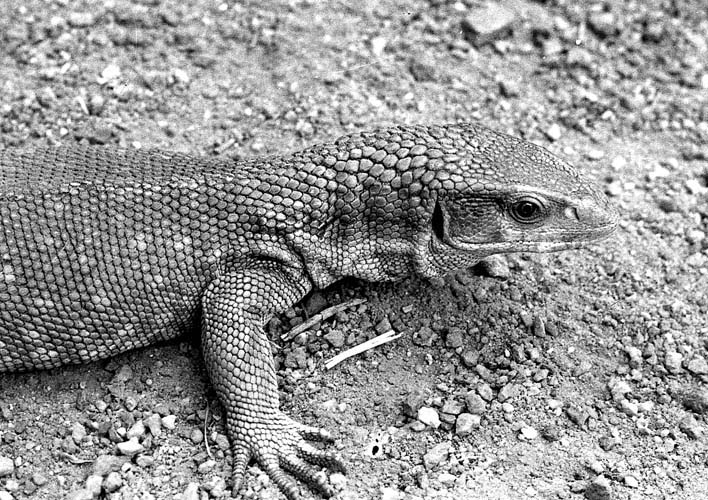
Savannah or Bosc's monitor (Varanus exanthematicus). This monitor is found over much of northern Nigeria and grows to a length of three to four feet. It feeds on a variety of invertebrates such as locusts, scorpions and millipedes. Its powerful limbs and sharp claws enable this monitor to dig very effectively. The precise area of origin of this specimen was unknown. April 1964.
This rather extraordinary photograph shows a house snake (Boaedon virgatus) that had eaten an agama lizard and then died, presumably for one or more reasons arising from the prey being too large. Note that the skin of the snake has split. The cause of death may have been suffocation due to the snake's airways being compressed, or possibly the agama inflicted lethal internal injuries. Zoological Garden, January 1967.
Showing fangs of rhinoceros viper (Bitis nasicornis). The vipers have the most highly developed venom delivery system of all snakes. The venom glands are located below and behind the eyes and the venom is carried by a duct on each side to the base of the fangs. The hollow fang resembles a hypodermic needle. The fangs are attached to a system of hinged bones which allow the fangs to become erect and deliver the venom with great efficiency when the snake strikes and bites. 1965.
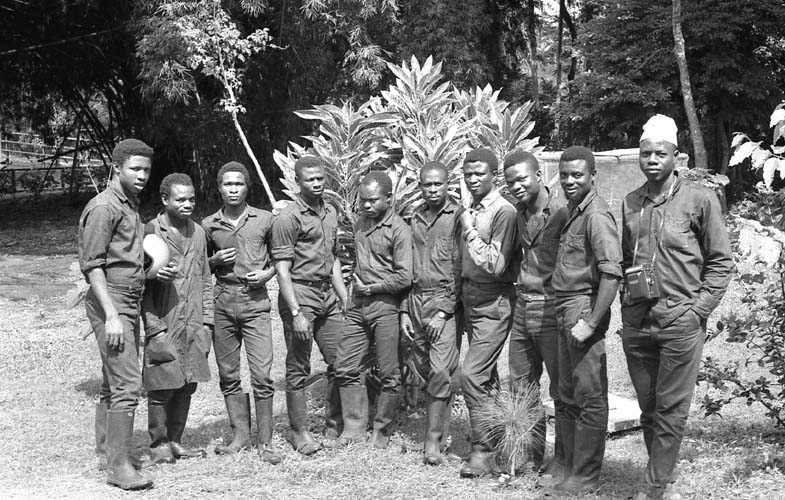
The zoo keepers, from different areas of southern Nigeria, provided the expertise and dedication without which the Zoological Garden would not have been the success that it was. From the left they are Michael Iyoha, Fred Inanga, Anthony Akhiale, Dickson Osagie, Augustine Udoh, Thomas Popoola, Daniel Osula (Head Keeper), Victor Babarinde, Nicholas Eze, and Nosiru Sadiku. Photo 1978. Wherever you are now, thank you. I remember you all with affection and gratitude. Bob Golding, Bristol, UK, 2012.